Article
Peak season readiness guide
Practical considerations for retailers preparing for Black Friday and Cyber Monday.

Peak season doesn't introduce new challenges; it amplifies existing ones. Higher transaction values, different shopping behaviors, and increased demand put pressure on every part of the customer experience. Small points of friction that go unnoticed throughout the year can quickly lead to lost revenue during the Black Friday Cyber Monday period.
The strongest peak season performance starts well before Black Friday. This guide brings together practical recommendations, platform insights, and key questions to help retailers review their readiness across customer experience, payments, fraud prevention, and operations before demand increases.
What we learned from BFCM 2025
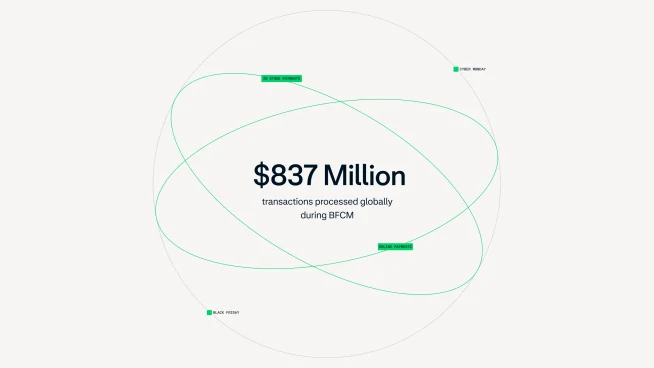
Every peak season provides a new set of insights into how customers shop, pay, and interact with retailers. Looking at last year's performance is one of the best ways to prepare for the next. Across the $43 billion in transactions processed on our platform, here's what stood out:
Average transaction values increased 22%, compared with a typical Friday
In-store basket sizes were 28% higher than online
33% of in-store Black Friday revenue came through digital wallets, up from 21% the previous year
85% of in-store transactions were contactless
Refund rates increased to 11.3%, compared to an annual average of 8.3%
What this means: Success during peak season depends on understanding how customer behavior, payment preferences, and operational demands change under pressure.
“An increase in transaction value is incredibly exciting, but it also raises the stakes. During peak season, the margin for error shrinks to zero. A payment friction point that might be a minor inconvenience in July becomes an abandoned cart; but in November, it turns into lost loyalty. Our data shows that consumers are ready to spend but only with retailers who make the transaction entirely invisible and effortless.” — Priyanka Agrawal, Global Retail Lead, Adyen
Want to dive deeper? Explore our full BFCM 2025 recap and key performance insights.
1. Customer behavior changes during peak season
Peak season exposes friction that often goes unnoticed throughout the rest of the year. A missing payment method, an unnecessary checkout step or an inconsistent experience between online and in-store can all impact conversion when traffic is at its highest. As shoppers continue to move between physical and digital channels, both experiences need to perform equally well during peak season.
Questions to ask your team
Are we offering the payment methods customers are most likely to use during peak season?
Have we reviewed the checkout experience across every channel?
Where are our customers dropping out before completing payment?
Are there points of friction that become more noticeable as transaction volumes increase?
Have we reviewed last year's customer feedback and checkout performance?
54% of shoppers will abandon a purchase if they can't pay with their preferred payment method.
Learn how retailers are reducing checkout friction with the right payment methods and dynamically personalizing the checkout experience based on shopper behavior.
2. Promotions should drive loyalty, not erode margins
Peak season is traditionally built on blanket discounts (e.g. "30% off everything"). While these discounts create short-term demand, they also compress margins and often reward customers who would have purchased anyway.
Increasingly, retailers are replacing one-size-fits-all promotions with personalized incentives that reflect customer behavior, purchase history, and loyalty. The goal isn’t just to sell more during Black Friday but to strengthen customer relationships beyond that moment.
Questions to ask your team
Are our promotions rewarding our most valuable customers?
Can we personalize offers across online and in-store experiences?
Do we have visibility into promotion abuse, coupon misuse, and refund policy abuse?
Can we recognize returning customers and tailor incentives in real time?
Have we balanced promotional investment against long-term customer value?
"Peak season shouldn't be about offering everyone the same discount. The retailers seeing the strongest results are using real-time customer data to deliver personalized offers that reward loyalty while protecting margins. When payments and promotions work together, every transaction becomes an opportunity to strengthen the customer relationship, not just complete a sale." — Priyanka Agrawal, Global Retail Lead, Adyen
3. Risk extends beyond the payment
Peak season changes more than transaction volume; it also changes how both customers and fraudsters behave. Loyal customers purchase more frequently, spend more, and engage differently with promotions and returns. Those same customer journeys also become attractive targets for abuse, with fraudsters exploiting promotions, refunds, and loyalty programs alongside attempting traditional payment fraud. The challenge is recognizing the difference between legitimate customers and behavior that only appears legitimate.
Questions to ask your team
Have we reviewed fraud rules using last year's peak season performance?
Which rules generated the most false positives during previous peak periods?
Are authentication settings supporting conversion as well as risk management?
Can we respond quickly if fraud patterns change during this period?
Fraud attempts have an average transaction value 64% higher than legitimate transactions. 44.3% of businesses report first-party fraud as one of their most common fraud challenges, while 39.8% cite policy and promotion abuse.
For a deeper look at how first-party fraud, policy abuse, and legitimate-looking behavior are reshaping enterprise fraud strategies, explore our 2026 report: Fraud’s identity crisis.

4. Operational readiness matters as much as technical readiness
Most retailers spend months preparing systems for peak season. Fewer review the operational processes that support them. Clear ownership, monitoring, and escalation processes help teams respond quickly when transaction volumes increase or unexpected issues arise.
Questions to ask your team
Does every team know who owns payment incidents?
Are escalation paths documented and understood?
Have support, finance, and operations teams aligned on peak season processes?
Are dashboards and alerts configured around the metrics that matter most?
Peak season preparation doesn't stop with retailers. See how we prepare our platform, teams and operational processes to support merchants during the busiest shopping period of the year.
5. Peak season is your biggest opportunity to learn
The decisions made during peak season shouldn't end when the season does. Reviewing payment performance, customer behavior, and operational trends creates a stronger foundation for future optimization — not just next Black Friday but throughout the year.
Questions to ask your team
Which metrics will define success beyond revenue?
Are we measuring authorization performance alongside conversion?
How will we review what worked and what didn't?
Which opportunities should become priorities after peak season?
Questions every retailer should ask before peak season
Customer experience
□ Can customers pay using their preferred payment methods? □ Have we reviewed checkout performance across every channel? □ Are there any unnecessary points of friction before payment?
Promotions & loyalty
□ Are our promotions rewarding the right customers, rather than everyone? □ Can we personalize offers across online and in-store experiences? □ Have we reviewed safeguards against promotion and policy abuse?
Payments & risk
□ Have fraud settings been reviewed for seasonal shopping behavior? □ Are we monitoring false positives alongside fraud rates? □ Is our authentication strategy optimized for both conversion and risk?
Operations
□ Does every team understand incident ownership and escalation? □ Are dashboards and alerts ready before peak traffic begins? □ Have refund and dispute processes been reviewed?
Performance
□ Have we agreed on the metrics we'll monitor throughout peak season? □ Do we have a plan to review performance after BFCM? □ Have we identified opportunities for improvement next year?
Final thought
The retailers that perform best during peak season are rarely the ones making last-minute changes. They're the ones that have reviewed their customer experience, aligned their teams, and prepared for how shoppers actually behave during the busiest shopping period of the year.
Peak season may only last a few weeks, but the decisions made before it (and the insights gathered afterwards) can improve performance long after Black Friday/Cyber Monday ends.
"It's easy to view peak season as a sprint to survive, but the most successful retailers view it as their greatest opportunity to learn. The data you collect over these few weeks provides an invaluable roadmap for the rest of the year. By analyzing how your systems, fraud rules, and customer touchpoints handled the pressure, you can turn seasonal insights into a year-round competitive advantage. And who knows? In the world of modern retail, any ordinary day can turn into peak season if you happen to go viral!" — Priyanka Agrawal, Global Retail Lead, Adyen