
Article
Payment service provider: What is it and how does it work?
Discover how a payment service provider helps you accept online payments.
Accepting online payments by card or digital wallets is essential for businesses.
A payment service provider (PSP) offers a way for businesses to accept multiple payment methods with a single integration. PSPs reduce the amount of payment integrations, simplify payment processing, lower the risk of cart abandonment, and speed up the settlement of funds.
If your business wants to optimize transaction costs, increase approval rates, and expand globally, you need to understand how a payment provider works..
In this blog, you’ll learn:
What is a payment service provider?
What do payment service providers do?
How do payment service providers fit into the transaction flow?
All the services included in a PSP
The benefits of a payment service provider
How to choose a payment service provider
Which payment service provider is considered the best?
Payment service provider with Adyen
What is a payment service provider?
A payment service provider helps businesses accept electronic payments. A PSP acts as a bridge between a business, its customers, and the financial institutions that process transactions.
When a customer buys something online or in-store, the PSP encrypts and manages the transfer of payment data, runs security checks, and handles the settlement of funds.
A modern payment service provider typically a complete checkout experience made up of the following components:
Payment gateway: Transmits payment data from the merchant to the acquirer.
Payment processing: Connects to financial networks to process the transaction.
Merchant accounts: Aggregates merchant accounts to support fast settlement.
A PSP connects to multiple payment methods so you don't have to build separate integrations for every option. By combining these elements, a PSP simplifies the entire payment infrastructure for businesses of all sizes.
What do payment service providers do?
Payment service providers manage the end-to-end transaction process. They handle everything from the checkout to the bank.
PSPs act as an all-in-one payment partner, providing the checkout interface, the technology that routes the funds, and the risk tools that prevent fraud.
By consolidating these services into a single API integration, a PSP gives businesses immediate access to a complete suite of financial tools without multiple relationships.
A payment service provider generally does the following:
Transaction processing: A PSP authorizes and clears payments across multiple card brands and payment methods.
Fraud prevention: The provider uses machine learning and custom risk rules to block fraud before it happens.
PCI DSS compliance: This ensures all sensitive cardholder data is securely tokenized and handled in accordance with industry standards.
Reporting and settlement: A unified dashboard summarizes sales, chargebacks, and payouts.
How do payment service providers fit into the transaction flow?
A payment service provider functions as a payment gateway and a payment processor, connecting your business directly to acquiring and payment networks. Some modern PSPs can also act as acquirers, which means they can handle risk assessments, settle funds, and manage other financial services in-house.
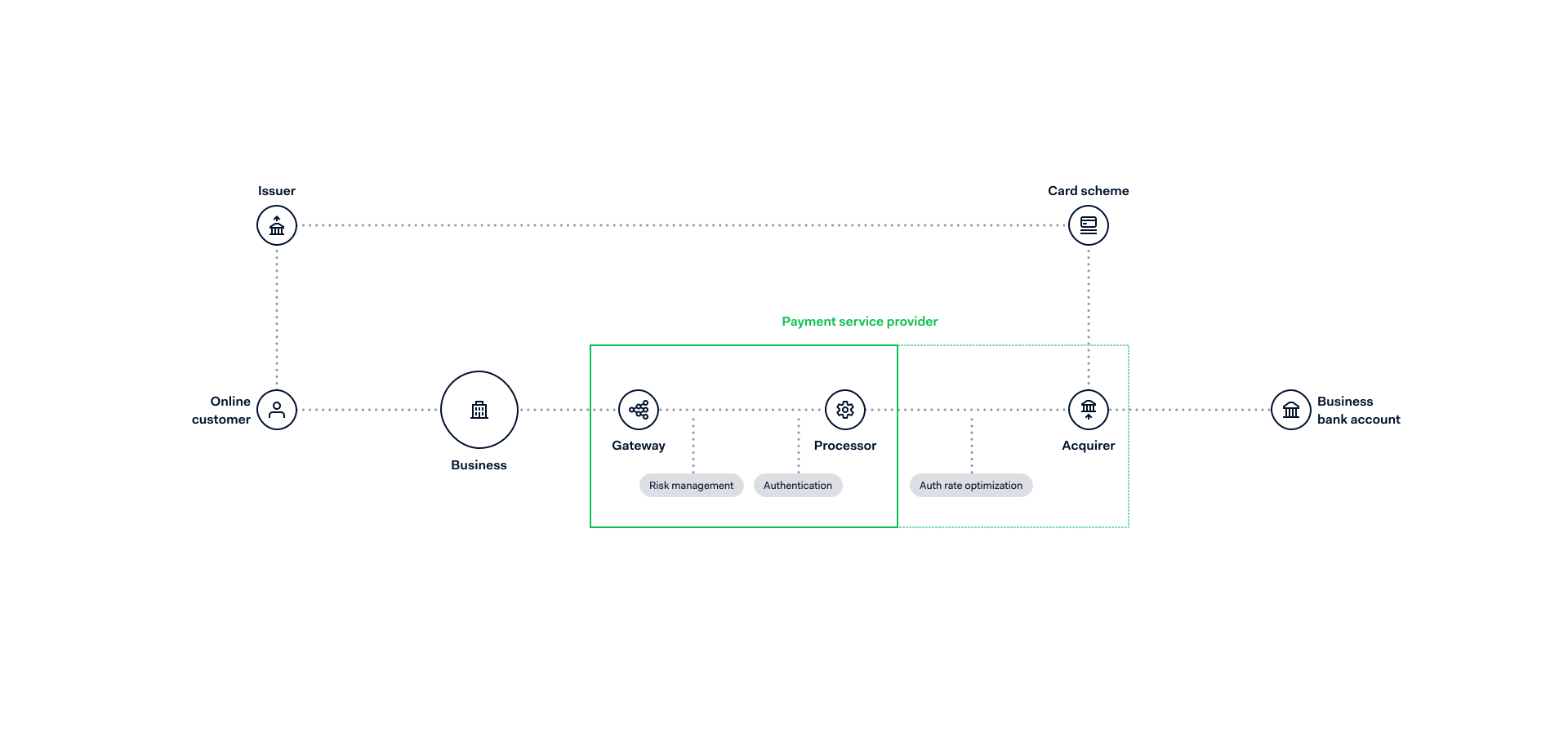
When a customer clicks pay, the transaction flow moves through these specific stages:
Initiation: The customer enters their payment details at checkout, and the payment gateway encrypts the data.
Authorization: The PSP routes the payment request through the card networks (like Visa or Mastercard) to the customer’s issuing bank for approval.
Verification: The issuing bank checks for available funds and performs security checks (such as 3D Secure) before sending an authorization response back.
Capture: The PSP receives the authorization, displays a success message to the customer, and prepares the transaction for settlement.
Settlement: The issuing bank transfers the funds to the PSP's merchant account, which then pays out your business.
This entire automated cycle happens in seconds, moving money swiftly and securely from the buyer's account to your business.
All the services included in a PSP
Payment service providers offer multiple services. Here are some of the ones included and what they are:
Payment service provider vs payment gateway
The difference between a payment service provider and a payment gateway is:
A payment service provider is an all-in-one partner that manages the entire payment process.
A payment gateway is the specific technology that securely transmits transaction data from the customer to the acquiring bank. It’s a component of a PSP.
Payment service provider vs payment processor
The difference between a payment processor and a payment service provider is:
A payment processor handles the technical execution of the transaction, such as communicating between the merchant, the banks, and the card networks.
A payment service provider is a comprehensive solution that includes the processor, gateway, risk management tools, and merchant accounts.
Payment service provider vs acquirer
The difference between a payment service provider and an acquirer is:
A payment service provider offers an end-to-end payment platform that combines gateway services, processing, risk management, and multi-currency settlement.
An acquirer is a financial institution that maintains the merchant's bank account and processes credit and debit card payments.
Payment service provider vs payment aggregator
The difference between a payment aggregator and a payment service provider is:
A payment aggregator allows businesses to accept payments under a shared merchant account infrastructure with simplified onboarding.
A payment service provider offers a broader, full-service payment infrastructure, providing advanced risk management, custom routing, and expanded financial tools beyond simple aggregation.
Payment service provider vs merchant account provider
The difference between a payment service provider and a merchant account provider is:
A payment service provider uses aggregated accounts, allowing multiple businesses to share a single account for fast, simple setup without lengthy underwriting.
A merchant account provider delivers dedicated merchant accounts through banks or financial institutions, requiring a detailed, manual underwriting process that can take weeks.
The table below contrasts the features of a payment service provider against a traditional merchant account provider:
Setup time
Payment service provider (PSP)
PSPs offer near-instant setup.
Merchant account provider (MAP)
Merchant account providers require days or weeks of manual underwriting.
Account type
Payment service provider (PSP)
PSPs use aggregated merchant accounts.
Merchant account provider (MAP)
Merchant account providers use dedicated merchant accounts.
Cost structure
Payment service provider (PSP)
PSPs typically charge simple transaction-based fees.
Merchant account provider (MAP)
Dedicated accounts may carry setup, monthly, and compliance fees.
The benefits of a payment service provider
A mobile payment service provider is an essential part of growing your business.
The benefits of using a payment service provider include:
Faster global expansion
The right international payment service provider helps you enter new markets quickly by supporting local currencies and payment methods like Wero, Pix, or Alipay.
By localizing payment routing, PSPs increase authorization rates and prevent transactions from being flagged as suspicious.
Simplified compliance
Staying compliant with payment card industry data security standards (PCI DSS) and regional regulations like PSD3 in Europe is complex. A good PSP takes on the burden of compliance, keeping your systems compliant without manual effort.
Advanced security
Modern payment service providers offer advanced security by using machine learning to detect and prevent fraud in real time. They analyze hundreds of risk variables, such as device fingerprinting and IP location to block fraudulent charges without turning away legitimate buyers.
Actionable insights
By tracking every transaction in a single dashboard, a PSP gives you access to robust data and analytics. You can monitor average transaction value, cart abandonment reasons, and payment method popularity to make better business decisions.
How to choose a payment service provider?
Choosing the best payment service provider depends on your business size, location, and specific needs.
Here are key factors to consider:
Business and industry
Think about your industry and business model. For example, if you run a subscription service or a gaming payment service provider, you will need robust recurring billing features. If you are in the hospitality or retail sectors, you will need terminal integrations and point of sale (POS) support.
Payment methods
While credit and debit cards are common, they’re not universal. In many countries, local payment methods dominate. Choose a PSP that supports a wide selection of regional payment methods so your customers can pay the way they prefer.
Payment channels
If you sell both online and in-store, look for an omnichannel PSP. Having a unified view of your online and in-person payments simplifies your accounting and helps you understand customer behavior.
Fee structures
Be sure to read the fine print. Some PSPs charge a flat fee per transaction, while others charge a percentage based on transaction value. Watch out for hidden costs like setup fees, monthly fees, chargebacks, and currency conversion fees.
Which payment service provider is considered the best?
The best PSP is one that simplifies complex payment processes, can replace multiple vendors, and helps your business grow globally.
Leading brands around the world trust Adyen as their payment service provider:
Spotify: Uses Adyen to offer local payment methods and subscription billing globally, helping boost conversion rates in emerging markets.
Meta: Uses Adyen to offer scalable, secure payments across its apps, delivering seamless commerce experiences between shoppers and brands worldwide.
Uniqlo: Adyen provides a unified commerce solution, allowing Uniqlo to seamlessly connect online and in-store payments for a consistent, personalized shopping experience.
Payment service provider with Adyen
With Adyen, you get a payment service provider that handles payment gateways, risk management, processing, and acquiring across all channels worldwide on a single platform.
Unlike traditional providers that patch together different legacy systems, Adyen built its platform from the ground up. This direct connection to global payment networks drives faster transaction speeds, higher approval rates, and deeper data insights.
Adyen gives you a true omnichannel solution, letting you accept payments online, in-app, and in-person. This means you don't have to work with multiple vendors, simplifying reconciliation and helping you grow faster.
Our platform provides enterprise-grade features designed to maximize your revenue:
Direct local acquiring: This lowers fees and increases approval rates with direct routing to local banking systems.
Protect: An AI-powered risk management system that dynamically blocks fraud while limiting false positives.
Unified Commerce: Connects online and in-store payment data to build a seamless customer experience.
Transparent pricing: This lets you understand your costs with transparent Interchange++ pricing models.
To lower your processing fees and strengthen your checkout security, get in touch with our team today.
Key summary
A payment service provider (PSP) acts as an intermediary connecting merchants, customers, and banks to process payments.
PSPs offer aggregated merchant accounts, letting businesses set up and accept payments in minutes.
Working with a single, full-stack PSP lowers transaction fees, minimizes operational complexity, and simplifies compliance.
Modern PSPs provide omnichannel support, letting you manage online and in-store payments under a single platform.
PSP FAQ
A white-label payment service provider allows businesses to offer payment processing and financial services under their own brand, using the infrastructure and licensing of a licensed provider. This allows SaaS platforms and other businesses to customize checkout experiences and monetize transactions without building payment technology or managing compliance in-house.