Article
Buy now, pay later for businesses
Learn how buy now, pay later can help businesses increase average order value, attract new customers, and how to choose the best provider for your needs.
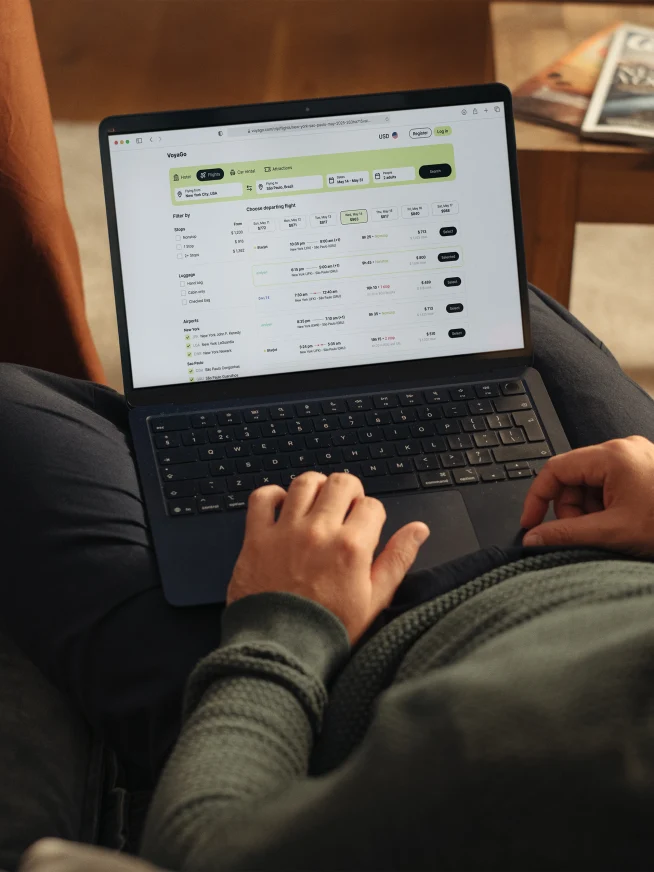
Buy now, pay later (BNPL) is an essential payment option for businesses in modern commerce.
Offering flexible payment options at checkout lets you meet customer expectations as they shift toward greater financial flexibility.
Meeting customers where they are will directly impact purchasing decisions and brand loyalty. BNPL is essential for businesses that want to improve conversion rates, increase average order value (AOV), and reduce cart abandonment, all while ensuring the merchant receives immediate payment without taking on credit risk.
In this article, you’ll learn:
What is buy now, pay later?
Different types of buy, no pay later
BNPL considerations for businesses
How does buy now, pay later for businesses work?
Buy now, pay later benefits for businesses
Is buy now, pay later right for your business?
Buy now, pay later solutions for businesses
Buy now, pay later for businesses examples
Buy now, pay later for businesses with Adyen
What is buy now, pay later?
Buy now, pay later is a flexible payment method that allows consumers to purchase immediately and pay over time while the business is paid in full upfront.
The volume of online payments made via Buy Now Pay Later (BNPL) on Black Friday 2025 rose 43% compared to the previous month, underscoring consumers' preference for flexible financing during major spending events.
Different types of buy, no pay later
To cater to the diverse consumer demographics and shopping behaviors, BNPL payment options can generally be divided into two main categories:
Invoicing
The invoicing model allows a customer to check out without paying anything upfront, with the requirement to repay the full balance within 14 to 30 days. This zero-interest, post-pay method is particularly popular in European markets where shoppers prefer to inspect goods before final payment.
Installments
The installments model allows shoppers to spread the cost of their purchase over multiple bi-weekly or monthly payments. A small deposit is typically collected at the time of purchase, making it the preferred and most widespread BNPL method across North America.
BNPL considerations for businesses
When offering BNPL, businesses must also consider how repayment structures differ based on the underlying legal contracts.
Credit loans vs. deferred payables: Repayments can be processed as either a direct consumer credit loan or as a deferred payable, where the merchant sells an "I owe you" (IOU) to the BNPL provider. This distinction can alter both customer repayment conditions and merchant contracting terms.
Repayment periods: Providers define distinct timeline options, ranging from full payment at the end of the month to weekly, bi-weekly, or monthly installments.
Late fees and interest: Providers enforce specific penalty structures, such as flat late fees, interest charges, or account suspension, if a customer misses an installment.
Marketing requirements: Some providers mandate that merchants run co-branded advertisements, feature promotional banners on their homepage, or dedicate a portion of their marketing budget to promoting the option.
Navigating these detailed operating requirements is a vital part of implementing a successful and cost-effective BNPL strategy.
How does buy now, pay later for businesses work?
For businesses, buy now, pay later works by integrating a BNPL provider at checkout.
The step by step process for accepting BNPL transaction usually goes like this:
Selection at checkout: The shopper selects their preferred BNPL option from the list of payment methods during checkout.
Instant evaluation: The BNPL provider conducts an immediate, soft credit check behind the scenes to verify the customer's eligibility in seconds.
Upfront settlement: Once approved, the transaction is finalized, and the provider pays the merchant the full purchase price upfront, minus a merchant service fee.
Flexible repayment: The customer repays the BNPL provider over time in interest-free installments or via a deferred invoice.
The BNPL payment flow ensures a smooth checkout experience for the shopper while protecting the merchant's cash flow.
Buy now, pay later benefits for businesses
Offering buy now, pay later (BNPL) gives customers greater flexibility at checkout while helping businesses increase sales and improve the customer experience. Key benefits include:
Increase average order value: Give customers the flexibility to spread payments over time, making higher-value purchases more accessible and potentially increasing basket sizes.
Reduce cart abandonment: Give hesitant shoppers more payment flexibility at checkout, helping remove cost-related barriers and turn more completed purchases.
Drive revenue growth: Reach customers who prefer flexible payment options and create more opportunities to convert demand into sales.
Encourage repeat purchases: Provide a convenient payment experience that can help build customer satisfaction and encourage customers to return.
Reach new customer segments: Appeal to shoppers who actively prefer BNPL, including younger consumers who may be more likely to use flexible payment methods.
Manage credit risk: Depending on the BNPL provider and model, businesses can offer flexible payment options without taking on the underlying customer credit risk.
Is buy now, pay later right for your business?
Determining whether buy now, pay later is right for your business depends on your specific strategic goals.
To evaluate if BNPL aligns with your business goals, you can compare your core business objectives with the actual performance outcomes of BNPL integration.
Although BNPL transaction fees can be higher than standard card processing, the overall increase in average order value (AOV) and checkout conversion typically outweighs these additional costs.
Attract new customers
Does BNPL help?
Yes
Increase average transaction value (ATV)
Does BNPL help?
Yes
Increase purchase frequency
Does BNPL help?
Yes
Increase conversion rate
Does BNPL help?
Yes
Lower payment processing costs
Does BNPL help?
No
* Note: While BNPL processing fees can be higher than standard card processing, the resulting boost in AOV and conversion rate generally outweighs the higher transaction cost. If you have the operational resources but want to be sure of the overall business impact, you can run a structured trial.
Use a flexible payment platform: Partner with a payment processor that allows you to turn payment methods on and off instantly without rewriting code.
A/B test your checkout: Implement BNPL for a subset of transactions or regions to directly measure customer adoption, average transaction value, and any potential cannibalization of lower-cost payment methods.
Testing payment methods in real-time ensures your business can make data-driven checkout decisions backed by concrete shopper behavior.
Buy now, pay later solutions for businesses
The most popular buy now, pay later solutions include global providers like Affirm, Afterpay, Atome, Klarna, and Zip, each catering to different regional markets and transaction values.
Choosing the right partner depends heavily on your primary customer base, average order size, and regional goals.
To help you compare the primary solutions available in the global payments market, here is a breakdown of the leading BNPL networks:
Affirm
Average Transaction Value (ATV)
Short-term option
High
Long-term option
High
Repayment period
Short-term option
4 installments
Long-term option
Monthly
Financing length
Short-term option
Short term
Long-term option
Long term
Interest rate
Short-term option
None
Long-term option
0% to 36%
Affirm partners with thousands of retailers in the United States, offering highly flexible financing options across high-value retail categories like apparel, home goods, and electronics.
Afterpay and Clearpay
Average Transaction Value (ATV)
Details
Under USD 2,000
Repayment period
Details
4 installments
Financing length
Details
Short term
Interest rate
Details
None
Originally founded in Australia, Afterpay operates across Oceania and North America, and is known as Clearpay in Europe. It is highly valued for its interest-free consumer model and strong authorization rates.
Atome
Average Transaction Value (ATV)
Details
USD 300 to USD 2,000
Repayment period
Details
3 installments
Financing length
Details
Short term
Interest rate
Details
None
Atome is a dominant BNPL player in Singapore and Malaysia, supporting both seamless digital checkouts and in-store point-of-sale transactions via dynamic QR codes.
Klarna
Average Transaction Value (ATV)
Short-term option
USD 1,000 to USD 3,000
Long-term option
High
Repayment period
Short-term option
Full repayment, 4 installments, 30 days
Long-term option
Up to 36 months
Financing length
Short-term option
Short term
Long-term option
Long term
Interest rate
Short-term option
None
Long-term option
0% to 19.99%
With over 140 million active global users, Klarna is one of the world's largest payment providers with exceptional brand recognition across Europe and North America.
Zip
Average Transaction Value (ATV)
Details
Under USD 1,000
Repayment period
Details
Flexible repayments
Financing length
Details
Short term
Interest rate
Details
None
Zip is a leading BNPL provider operating in Australia, New Zealand, the US, and Canada, offering interest-free shopping options across both physical and digital retail channels.
Buy now, pay later for businesses examples
Global brands have successfully integrated BNPL to drive customer acquisition, increase order size, and streamline their global checkout operations.
Here are some examples:
City Beach
Australian fashion retailer City Beach partnered with Adyen to consolidate fragmented payment systems into a single unified commerce platform. By leveraging Adyen, they easily introduced Buy Now, Pay Later options like Afterpay, improved fraud prevention through RevenueProtect with machine learning, and streamlined refund and chargeback management.
Kendra Scott
Fashion brand Kendra Scott modernized its payment ecosystem by replacing separate in-store and ecommerce systems with Adyen’s single platform. This migration provided real-time transaction insights, reduced PCI compliance workload by 70%, and enabled rapid deployment of alternative payment methods such as BNPL.
ROLLER
Attractions software platform ROLLER launched ROLLER Payments using Adyen for Platforms to embed payments into their guest experience. The integration expanded available payment options to 38 local and global methods (including BNPL), boosted authorization rates from 87% to 94.5%, and reduced onboarding times for venues from months to weeks.
Buy now, pay later for businesses with Adyen
Offering BNPL with Adyen allows you to integrate, test, and scale multiple BNPL options globally through a single, unified payment platform.
Instead of managing complex integrations, separate contracts, and disconnected settlements for every provider, Adyen handles the operational heavy lifting for you.
When you manage your payment strategy through Adyen's financial technology platform, your business gets access to several operational advantages:
Single integration: Turn on or off popular BNPL options like Klarna, Affirm, Afterpay, Atome, and Zip with a simple toggle in your Adyen Customer Area without writing any new code.
Unified reporting and reconciliation: View and analyze all transaction data in one centralized dashboard, and benefit from unified settlements across card payments and alternative payment methods.
Advanced risk management: Leverage Adyen's built-in fraud prevention tools while the BNPL providers absorb the full risk of consumer defaults.
Global scalability: Seamlessly offer local BNPL methods in Europe, North America, and Asia-Pacific to match regional shopping preferences.
Are you ready to optimize your checkout experience and accelerate your business growth?
Contact our sales team today to discover how Adyen can help you implement a localized BNPL strategy.
Key summary
Diverse models: BNPL consists of invoicing (deferred 14–30 days, popular in Europe) and installments (split bi-weekly or monthly payments, popular in North America).
Revenue acceleration: Offering BNPL directly boosts average transaction values and customer acquisition. It doesn’t necessarily lower transaction costs or raise authorization rates.
No merchant credit risk: BNPL providers assume all credit and default risks, settling payments upfront with the merchant and handling customer collections.
Agile testing: Unified payment platforms like Adyen allow merchants to easily test different BNPL methods to gauge consumer adoption before a full rollout.
Global optimization: Leading brands like Lorna Jane, Superdry, and Richemont successfully utilize BNPL to eliminate checkout friction and increase conversions.
FAQ
Buy now, pay later for business is an alternative payment method that enables merchants to offer short-term financing to consumers. Shoppers can purchase goods immediately and split payments over time, while the business receives the full purchase amount upfront.