Article
Tap to Pay: A guide for businesses
Learn how Tap to Pay can speed up checkouts and improve the shopper experience.
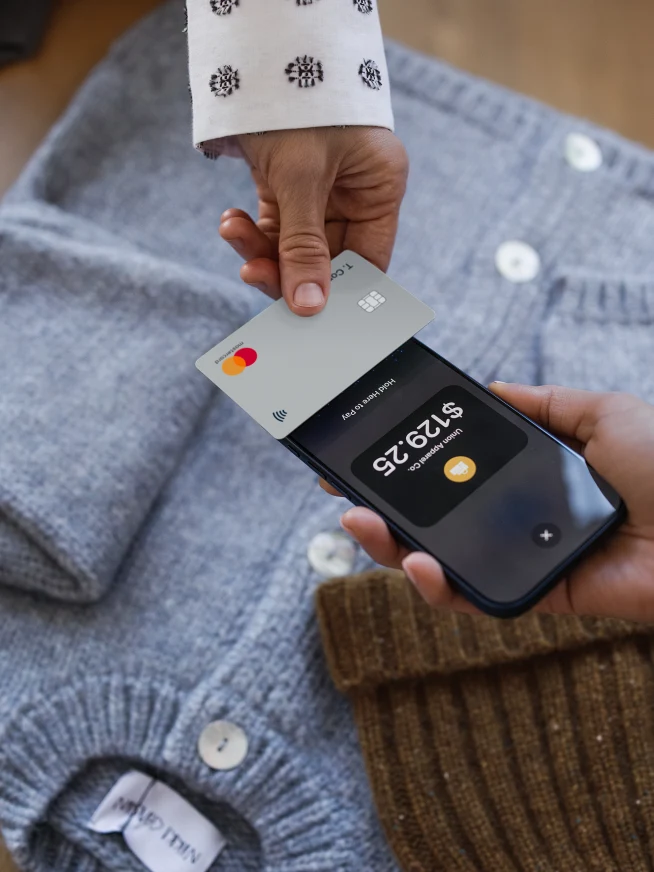
Your customers’ wallets are already on their phones. As digital wallets become the default way to pay, global users are expected to reach 5.2 billion in 2026.
Businesses that fail to adapt risk creating friction at the point of sale and falling behind evolving customer expectations.
For retail and hospitality, Tap to Pay offers a practical path forward by reducing reliance on bulky hardware, accelerating checkout, and meeting growing demand for fast in-person payments.
In this article, you’ll learn:
What is Tap to Pay?
How Tap to Pay works
Benefits of using Tap to Pay
Popular Tap to Pay methods
Tap to Pay with Adyen
What is Tap to Pay?
Tap to Pay is a contactless payment method that allows shoppers to securely complete transactions by tapping their credit card, debit card, or smart device against a payment terminal or mobile device.
Tap to Pay removes the need to swipe or insert a card, or to exchange physical cash, providing an easier and faster way to pay.
How Tap to Pay works
Tap to Pay works by using near-field communication (NFC) technology to wirelessly transmit encrypted payment data between a shopper's payment device or card and the business’s payment terminal or compatible smart device.
Here’s a step-by-step breakdown of how Tap to Pay transactions work:
The business initiates the transaction. The business enters the exact purchase amount into their point-of-sale (POS) system, payment terminal, or a compatible smartphone acting as a terminal.
The shopper presents their payment card or device. The shopper holds their NFC-enabled credit card, debit card, smartphone, or wearable device within a few centimeters of the merchant's payment reader.
The devices establish a connection. The NFC technology securely transmits the encrypted payment details from the shopper's device to the payment terminal in less than a second.
The payment network authorizes the transaction. The payment gateway immediately routes the encrypted data to the acquiring bank and the major card networks for approval.
The payment is confirmed. The merchant receives an instant approval notification on their screen, and the checkout process is complete.
Because these transactions rely on tokenization, the actual card details are never stored directly on the merchant's device. This ensures maximum security against fraud while maintaining a seamless payment flow.
Benefits of using Tap to Pay
The benefits of Tap to Pay include:
Lower operational costs, greater scale. Tap to Pay lets merchants minimize hardware expenses by using software-based solutions on existing mobile devices, so they can scale their physical footprint faster.
Faster, more flexible checkout. Tap to Pay eliminates the need to swipe or insert cards. Staff can use smartphones as POS terminals to bust queues and accept payments anywhere on the store floor, providing a better customer experience.
Better security. Tap to Pay uses dynamic encryption and tokenization for every transaction, making it highly secure and less susceptible to payment fraud than traditional magnetic stripe cards.
Popular Tap to Pay methods
Here are the most common Tap to Pay methods shoppers use at in-person checkout:
Debit and credit cards with NFC. Modern payment cards feature built-in NFC chips that communicate directly with the merchant's terminal when hovered or tapped.
Digital and mobile wallets. Smartphone applications known as digital wallets allow shoppers to securely link their payment cards and pay without carrying a physical wallet.
Smartwatches and wearables. Connected wearable devices take convenience a step further, enabling shoppers to effortlessly complete purchases with a quick tap of their wrist.
What’s the difference between Tap to Pay on iPhone and Tap to Pay on Android?
The primary difference between Tap to Pay on iPhone and Tap to Pay on Android is that with iPhone, users tap their payment instrument on the front screen of the device to pay and with Android, users tap the back of the device.
Tap to Pay with Adyen
As Tap to Pay adoption continues to grow, businesses must ensure their payment infrastructure can accept all types of contactless transactions.
Adyen provides businesses with a single, unified platform to seamlessly accept contactless payments across all devices and global sales channels.
Adyen’s financial technology allows merchants to transform compatible iPhones and Android devices into secure, flexible payment terminals without needing extra hardware.
By integrating Adyen's Unified Commerce solutions, your business can quickly scale its in-person payment capabilities, optimize the shopper experience, and leverage rich data insights to fuel long-term growth.
Are you ready to transform your in-person payment experience and speed up your checkouts? Explore our solutions or reach out to our team to get started.
Key summaries
Tap to Pay is an NFC-based contactless payment method that requires no swiping or physical card insertion.
Shoppers can pay instantly using NFC-enabled credit or debit cards, digital wallets, and smart wearables.
The step-by-step transaction process is completed in seconds via secure, encrypted data transmission.
Merchants can use Tap to Pay on smartphones to eliminate hardware costs and enable mobile queue busting.
Adyen provides secure, unified Tap to Pay solutions that seamlessly integrate with both iPhone and Android devices.
FAQ
Tap to Pay is supported by most modern payment terminals and smart devices equipped with NFC technology. This includes NFC-enabled credit and debit cards, smartphones using digital wallets, and smartwatches. Merchants can also use compatible iOS and Android devices to accept payments.