Article
Understanding PAD payments in Canada
Learn how pre-authorized debit payments work and why it’s a smart way to get paid.
If you’ve ever paid your phone bill automatically or subscribed to a streaming service, you’ve likely used a PAD payment. Short for Pre-Authorized Debit, PADs let businesses take authorized payments directly from customers’ bank account. There's no need for credit or debit cards, or chasing invoices. Instead, it's a simple, secure way to collect recurring payments—and it's popular in Canada.
How do pre-authorized debit payments work?
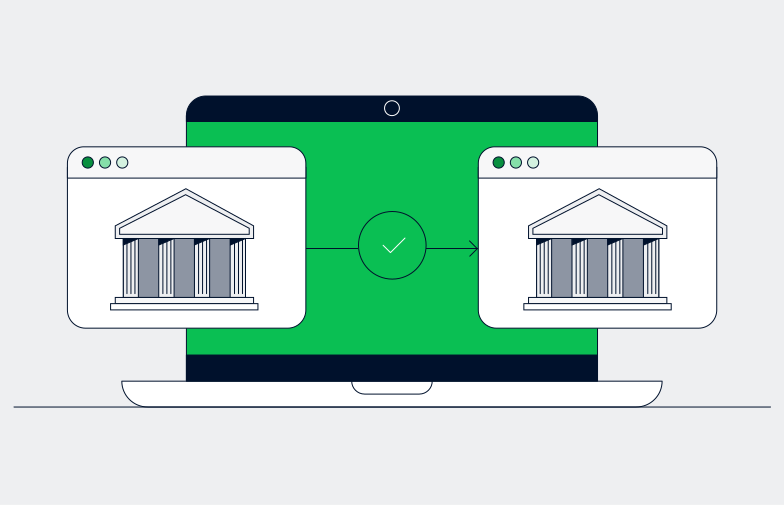
With PAD payments, instead of manually sending money, customers share their banking details with the business and sign an agreement. From there, payments are automatic.
Behind the scenes, these transfers are powered by Canada’s Electronic Funds Transfer (EFT) system and processed through the Automated Clearing Settlement System (ACSS). The ACSS network facilitates secure bank-to-bank payments across the entire country.
PADs are often used for recurring or subscription-based payments, like:
Telecom bills: Monthly phone and internet plans
Insurance premiums: Home, auto, or life insurance policies
Subscription services: Streaming, gyms, or SaaS products
Utility payments: Electricity, water, or gas bills
Professional services: Retainers for accountants and consultants
What are the benefits of PADs for businesses and customers?
PADs offer a streamlined and cost-effective payment method for businesses.
Since bank account details don’t expire, businesses who use PADs see fewer failed payments and reduced churn. Additionally, PADs have lower transaction fees compared with card payments, making them ideal for companies managing recurring billing costs.
For customers, PADs are convenient. It's simple: with automatic payments, bills are paid on time without a second thought.
A real-world example of using PADs
Consider a B2B platform in the food service industry.
Suppliers often deal with delayed payments, manual processing, and following up on invoices. Enabling PAD payments leads to:
No more waiting for cheques: Payments are processed electronically and quickly.
Less time chasing payments: Automated withdrawals ensure timeliness.
Better cash flow: Faster processing reduces Days Sales Outstanding (DSO), so suppliers get paid sooner.
Similarly, industries like telecom, insurance, and SaaS can see benefits ranging from uninterrupted phone service to keeping an insurance policy to maintaining an active gym membership.
Key considerations for PAD payments
While PADs are a reliable way to collect payments, there are considerations to keep in mind:
Payment confirmation: It can take up to five business days to confirm a payment.
Dispute windows: Customers can dispute payments—known as chargebacks or “recourse claims” in the PAD system—if they believe a transaction was unauthorized or didn’t follow the agreement.
Businesses: Have up to ten days to dispute PADs.
Consumers: Have up to 90 days to dispute PADs.
Authorization: Before initiating debits, businesses must ensure they collect proper authorization.
PADs and Adyen: A unified payment solution
One of the biggest advantages of using Adyen for PAD payments is you can manage them alongside all your other payment methods—on a single, global platform.
From integration to reconciliation, everything works together, helping you simplify operations and save time. Goodbye, disconnected systems.
For businesses and customers alike, PAD offers a cost-effective, efficient alternative to card payments. It keeps cash flow steady and makes recurring payments easy to manage.
To start streamlining your payments with PADs, contact our local team today.