Case study
Preparing for peak season with Pandora, the world's largest jewelry brand
Pandora became a household name thanks to their iconic charms: small tokens that can represent a personal milestone, a trip, or a loved one. Add enough of them to a bracelet or necklace, and it becomes a life story you can wear.
While Pandora is synonymous with the charm, they’ve since grown into the world's largest jewelry brand, with 915 million visitors to its stores and online channels in 2025. During peak season, a shopper who walks into a busy Pandora store or visits its website won't understand the behind-the-scenes effort to get the brand ready for retail's biggest months. But for the world’s largest jewelry brand, peak season prep begins long before Black Friday.
How does a brand built on gifting make the most demanding weeks of the year feel effortless for customers and staff? By making payments seamless, no matter where or how the customer is buying.
1,100+
stores live in Europe and the UAE
+3,500
terminals live
30
ecommerce markets live
For Pandora, peak season starts long before November


Selling memories during peak season
Whether a customer is buying one of Pandora’s iconic charms or another piece of fine jewelry, the purchase is loaded with meaning. Selling that meaning is a skill, and the company thinks of the purchase process as a selling ceremony: part concept, part training, part mindset.
"We don't only sell a product," says Christian Krebs, Senior Director of Global Ecommerce Experience at Pandora. "We also sell a story. We also sell a memory."
This highly personalized buying experience creates a unique challenge for the brand during peak season. Over retail’s biggest weekend, Pandora’s website and stores will handle hundreds of thousands of transactions — sometimes millions. Each transaction must deliver the same selling ceremony experience.
"We don't only sell a product. We also sell a story. We also sell a memory."
Christian Krebs
Senior Director of Global Ecommerce Experience, Pandora
To scale their retail operations while preserving the personal touch customers know and love, Pandora starts planning for Black Friday in July, says Pablo Stobbia, a Payments & Fraud Manager at Pandora.
Beginning in September, ecommerce, payments, infrastructure and retail teams meet weekly to review regional targets and plan out what can realistically ship in time. Delivery runs in two-week sprints, so potential missed deadlines surface early, rather than in November.
In November, the team stops rolling out new payment features.
"From November onwards, we can’t release any new payment method or any new features within our checkout," Stobbia says. Preparing for peak season then becomes about protection: page speed, checkout stability, and security, because a busy site is also a target.
During Black Friday week, global ecommerce, digital marketing, operations, and development move into one room in Copenhagen, with black curtains around its glass walls and an hourly payments dashboard everyone can see.
That dashboard displays data directly from Adyen’s platform, says Krebs. "We work on the analytics together, ensuring that there are no issues.” If the brand misses any hourly targets, the war room team rethinks on the spot. "The hourly targets are simply too big in peak," he adds.
One platform, every channel and market
The team can only move that quickly because of their tech stack. Over the last three years, Pandora has adopted two of the industry's leading platforms across its global markets: Salesforce (for their website) and Adyen for payments.
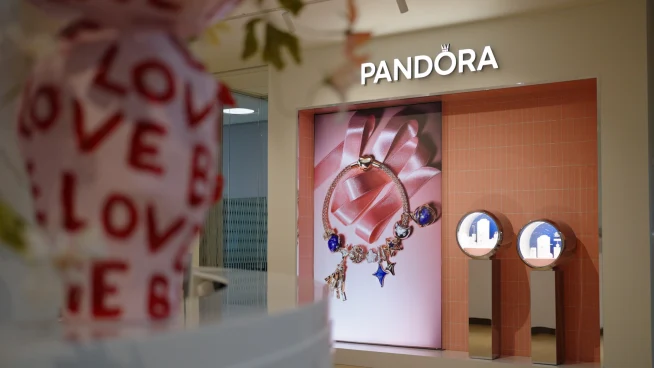
A unified approach to payments helps Pandora keep ecommerce and in-store experiences working in tandem around the world. Adyen powers in-store payments in 21 markets, with 3,500 terminals in more than 1,100 stores across Europe and the UAE alone. Behind those 3,500 terminals, the hardware choices are just as deliberate. Pandora mostly uses Adyen’s AMS1 and P630 terminals, and many stores attach the AMS1 to the back of an iPad. Associates can stay with a customer on the shop floor, talking through a piece, and take payment right there rather than walking them to the till. The selling ceremony doesn’t pause at checkout.
Pandora will launch in-store payments through Adyen in Australia and New Zealand in Q1 of 2027, with all remaining markets to follow over the next couple of years. The platform also now drives Pandora’s ecommerce experience in around 30 countries.
For customers, this unified approach means a more consistent selling ceremony, no matter where or how they buy. They can buy online and return in store, as well as redeem gift cards in person or online. It all works as one experience.
And the partnership works both ways.
"A business like Pandora pushes Adyen. Not only are they the world's biggest jewelry brand, but they're truly a retail innovator who's obsessed with delivering a great customer experience down to even the smallest details," says Nadya Maffei, Global Head of Retail at Adyen.
In 2026, after six years of partnership and expansion, Pandora named Adyen a Global Strategic Partner. "That trust means everything to us," says Maffei.
"A business like Pandora pushes Adyen. Not only are they the world's biggest jewelry brand, but they're truly a retail innovator who's obsessed with delivering a great customer experience down to even the smallest details."
Nadya Maffei
Global Head of Retail, Adyen
Making gifting seamless
Partnering with Adyen, Krebs says, also means that the team can roll out new payment features faster. "When we develop new features, we can quickly bring them to a lot of markets at the same time. We don't need to develop them individually for each market,” he notes.
Gift cards are a good example of how that unity unlocks speed. Pandora is a gifting company, but for years it had no gift card solution in some markets. Now, customers can buy a gift card online and redeem it in store — or the other way around — thanks to Adyen. This year alone, Pandora has launched gift cards in six new countries: Germany, Austria, Belgium, the Netherlands, Spain, and Portugal. That’s 400 more stores that can now offer gift cards, as well as Pandora’s local ecommerce sites in those markets.
Balancing risk and reducing fraud
But global payments also require carefully balancing risk on a larger scale, especially during peak season. "We don't want to be too permissive, but we don't want to be restricted either," Stobbia says, because most transactions come from genuine shoppers who shouldn’t be turned away.
Most recently, Pandora’s global payments infrastructure was put to the test in Brazil. The brand launched ecommerce there in mid-September 2026, just a couple of months before peak season, where an Adyen team worked alongside Pandora to set up local payment methods like Pix, as well as the ability to pay in installments.
Building for the future of reta
il
A solid global partnership empowers Pandora to plan for what comes next. For example, the brand is experimenting with using AI to better translate their signature selling ceremony to the ecommerce experience.
In store, staff seek to understand whether someone is just browsing or ready to buy, and whether the piece is for themselves or someone else. They then shape the customer experience to match.
But online, it’s harder to gauge intent. By Krebs’ estimate, about 98% of visitors currently leave without buying, and shoppers are "not as patient" as they are in store. If the brand can better understand a shopper’s intent with AI, they can offer a more personalized experience that better converts browsers into buyers.
More shoppers are also now asking AI assistants where to find a gift, so Pandora is weighing how to adapt to this totally new retail channel. While buying directly through AI agents is still novel, and volume is low, Krebs expects it to grow.
"What you knew to be true six months ago or three months ago just isn’t true anymore,” he notes.
Whether the customer journey starts in a store, on a website, or in a chat with an AI assistant, Adyen ensures that the payment experience will be consistent and reliable, keeping Pandora at the forefront of the future of retail.

Lessons for other retailers
Pandora continues to perfect its tech stack for the big moments, prioritizing partners who can perform under pressure.
And Black Friday remains Pandora's biggest day of the year. "One thing I love about peak season is how fast everything goes, how little time there is from thought to action," says Krebs.
Four peak seasons in, Krebs has stopped expecting any of them to look the same. "Don’t expect that this year is going to be anything like last year," he says. "In my four years [at Pandora], it's changed drastically from year to year."
Some years, shoppers wait to spend their money on Black Friday or Cyber Monday; in others, they spend the moment promotions start.
The only constant? The Pandora team always dissects which days drove sales and what triggered the smaller spikes. Stobbia's advice is to let the data lead. "It's very important to look at the data," he says. "The data will help us analyze and make planning better."
He also recommends widening the room. Look beyond the technology team, because payments, ecommerce, retail, operations, and logistics all touch peak season.
Then there’s what comes next. More shoppers now ask AI assistants where to find a gift, Krebs says, so Pandora is working on being found there. Buying directly through agents is still very novel but he expects it to grow. "What you knew to be true six months ago or three months ago is now not true anymore."
Whatever shape the next peak season takes, Pandora’s goal stays the same: Create an effortless shopper experience — without letting the customer know how much hard work is involved.
"It's both terrifying and so fun," Krebs says. "It's something to talk about for the rest of the year: ‘Do you remember when we had to turn it around in 20 minutes?’