Article
Payment gateway: What is it and how to choose one?
Dive deeper into the world of payments and get a better understanding of payment gateways. Discover the most important things to consider when choosing one for your business.

Understanding every part of the payment flow may seem difficult as it consists of multiple steps and parties. We’ve made it easy for you by narrowing it down and focusing on the first step of the flow: the payment gateway.
If you’re wondering what a payment gateway is, you’ve come to the right place.
In this article you will learn about:
What is a payment gateway?
Choosing the best payment gateway for your business.
Where does Adyen fit in?
What is a payment gateway?
A payment gateway is a service that helps businesses initiate and accept payments. It’s typically a web server to which a business’s website or POS system is connected, providing different channels to accept payments, such as online, in-app, or in-person.
You can either choose a payment gateway that is provided by a bank or one from a provider that can connect to one or more payment processors.
Types of payment gateways
Online payment gateways often offer services for both websites and apps. Although they have the same function (initiating payments), they can differ in the functionalities, features, and channels they support. It’s essential to choose one that works best for your business.
For example, subscription businesses often need a gateway that supports recurring payments. SaaS or marketplaces might require one that can offer embedded payments. Businesses in industries like airlines and gambling might need a high-risk payment gateway with a high-risk appetite.
Where the payment gateway sits in the transaction flow
Even though payments are completed in a matter of seconds, quite a few steps happen in the background. Since the payment gateway initiates the payment, it’s the first step of the transaction flow.
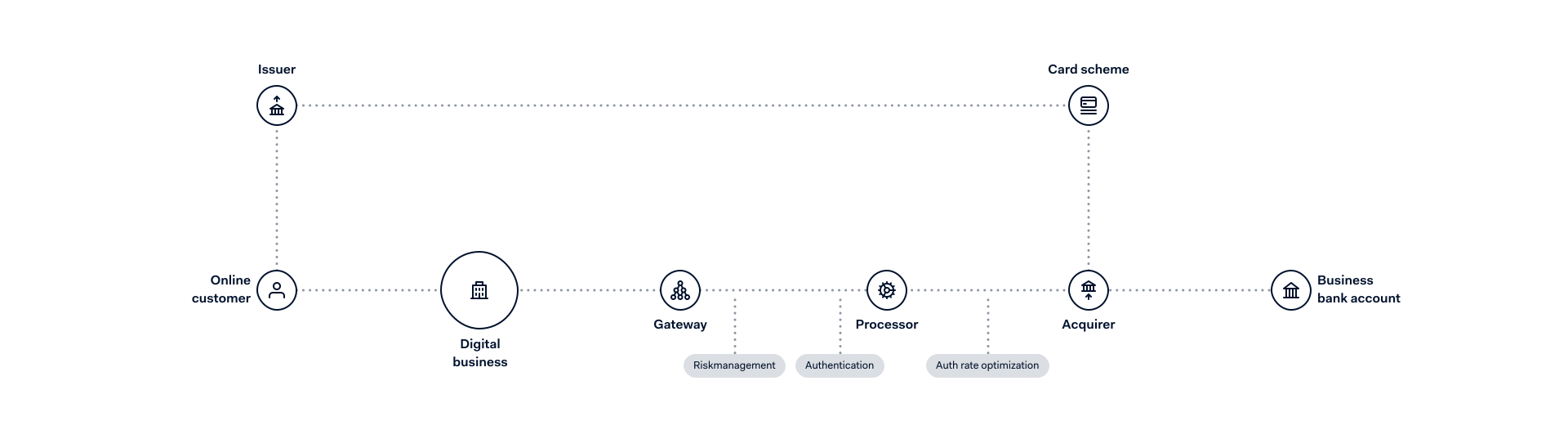
Below is the payment flow (in simple terms):
When a customer makes a purchase, the business sends the customer's payment information to the payment gateway.
The payment gateway shares it with the payment processor, which shares it with the card scheme.
The card scheme shares it with the issuer, which performs checks to determine if the transaction should be approved or declined.
The decision regarding the transaction flows through the card scheme, payment processor, and gateway to the business and customer.
If the payment is approved, the funds move from the customer's bank to the acquirer(sometimes referred to as the merchant account) and then to the business's bank account.
Choosing the best payment gateway for your business
There are several factors to be aware of when choosing a payment gateway. Some may be more important to your business than others. The payment methods available will vary by market, so businesses should choose a provider that supports the payment methods their customers prefer.
Pricing
Different gateways have different pricing models. Saving costs is often a priority for businesses, which makes it important to choose a gateway with a pricing model that suits your business needs.
Some gateways charge a percentage-based fee, and some a fixed fee per transaction. If your transactions involve a high number, a fixed fee could be more cost-friendly.
When calculating the potential costs, it’s also important to remember that some gateways charge for one-off costs like setup or integration fees. They might also offer services like 3D Secure, protection against payment fraud, or authorization optimization, which may affect the cost but add value to your business.
Security and compliance
Security and compliance are central to protecting your business and customers. The payment gateway should hold specific certificates and conform to measures to protect payment information. The ones you should expect are:
Payment Card Industry Data Security Standard (PCI): This is crucial for businesses that accept credit card payments. Businesses must adhere to 12 security standards when handling credit card data, including accepting, transmitting, processing, and storing it.
Payment Services Directive 3 (PSD3): The gateway needs to follow these new regulations on payment authentication if you accept payments in the European Union (EU). However, they haven’t been implemented yet, which means that Payment Services Directive 2 (PSD2) and Strong Customer Authentication (SCA) still apply.
General Data Protection Regulation (GDPR): This regulation ensures that personal data is only used for purposes for which the customer has consented. Businesses must follow the GDPR to accept payments in the EU.
International payments
There are a few things to keep in mind if you accept international payments. First, it's essential to ensure your gateway can accommodate this. You can accept international payments through cross-border transactions or local acquiring, which tends to offer higher authorization rates.
Another critical aspect of accepting international payments is offering your customers' preferred payment methods. That's why you need to make sure your gateway provides the payment methods you need. It could also be relevant to check if the gateway can accept foreign currencies and the associated fees for your international payments.
Different countries have different regulations. For instance, in Australia, there are specific rules on authentication and in Japan, new 3DS regulations will be implemented by 2025. Your payment gateway must comply with all the local regulations where you plan to accept payments.
Integration options
Different gateways offer different levels of flexibility when it comes to integration options. You can either integrate with the gateway directly through one or multiple APIs, or with your ecommerce platforms through plugins, if the partnership exists.
Where does Adyen fit in?
Adyen is a financial technology platform offering various solutions for enterprise businesses to enhance payments. We’re a payment gateway, processor, and acquirer in one platform. This means we offer the same functionalities as a payment gateway, allowing our customers to initiate payments. We also provide solutions like authentication, risk management, and authorization optimization - all in one platform. Since we have everything in one platform, we can gather data from all processes and make more informed decision-making. This leads to improved performance such as higher conversion rates and higher auth rates.
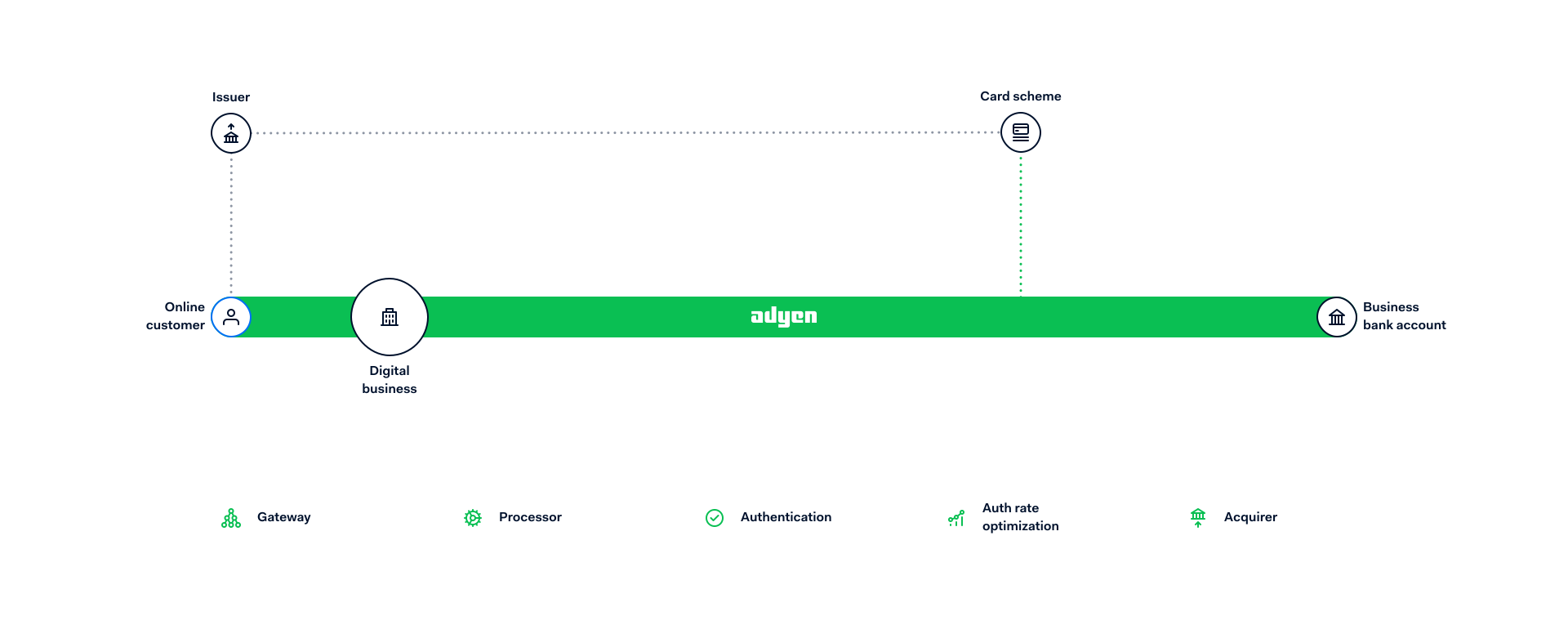
Using a provider that is both a gateway and payment processor can drive more value for your business. There is only one API to connect to and one contract for almost 100 markets, reducing complexity for businesses that want to process payments with us.
Our single-platform setup creates a smooth transaction flow, in which each part can easily communicate. This is an essential part of creating effortless payments, resulting in high authorization rates and increased revenue for our customers.
Do you want to enhance your payments? Discover more about what it means to accept payments with Adyen.
How to choose a payment gateway
Payment gateway architecture varies by provider, but for enterprise businesses, a few capabilities tend to matter most. As you’re evaluating solutions, consider the following parameters:
Security and compliance
Your payment gateway should hold specific certificates and conform to measures to protect payment information. The ones you should expect are:
Payment Card Industry Data Security Standard (PCI): Businesses must adhere to 12 security standards when handling credit card data, including accepting, transmitting, processing, and storing it. If you accept credit card payments, it’s critical that you use a PCI compliant payment gateway.
Payment Services Directive 3 (PSD3): The gateway needs to follow these new regulations on payment authentication if you accept payments in the European Union (EU).
General Data Protection Regulation (GDPR): This regulation ensures that personal data is only used for purposes for which the customer has consented. Businesses must follow the GDPR to accept payments in the EU.
You should also look for fraud protection in your payment gateway. Some companies, like Adyen, use AI tools to help fight fraud while keeping conversion rates high.
Payment performance, reliability, and optimizations
Your payment process can make or break a sale. To keep customers moving and happy, you want to make sure your gateway can stand up to anything you throw at it.
Ask about payment gateway transaction success rates, communications, and how the payment processor ensures payments can always be accepted. Get data to validate claims. An excellent metric to evaluate is the provider’s uptime on high-volume days like Black Friday or Cyber Monday.
Additionally, ask your provider what they can do beyond simply processing payments. Look for additional features that can help you optimize the entire payments funnel through things like:
Payment gateway routing
Payment gateway tokenization
Payment gateway analytics
AI payment gateway features
Integration and time to value
There are different levels of flexibility when it comes to integration options. You can either integrate directly through a payment gateway API, or with your ecommerce platforms through plugins, if the partnership exists.
As you’re evaluating, ask questions about:
APIs and SDKs that fit your tech stack
Documentation quality and implementation support
Options for multiple front ends (web + mobile app) and multiple brands/regions
Also consider payment gateway integration costs in total terms. Remember to account for engineering time, maintenance, and the operational cost of fragmented reporting across providers.
Fees and total cost of ownership
Payment gateway fees can vary based on provider model, markets, and features included. Some gateways charge a percentage-based fee, and some a fixed fee per transaction. Both models have their advantages and disadvantages, based on the number of transactions you process and the amount per transaction.
Beyond published fees, consider:
Operational overhead
Support model and incident response
The cost of adding new markets or methods
When calculating the potential costs, it’s also important to remember that some gateways charge for one-off costs like setup or integration fees. They might also offer services like 3D Secure payment gateways, protection against payment fraud, or authorization optimization, which may affect the cost but which add real value to your business.
Global expansion: multi-currency and cross-border
Your multi currency payment gateway should grow with you. Check if the gateway can accept foreign currencies, and the associated fees for international payments. Your payment gateway should also comply with all the local regulations where you plan to accept payments.
You also want to make sure your cross-border payment gateway lets customers use their preferred payment methods. Make sure your forex payment gateway provides local payment methods which are, on average, 49% cheaper than credit and debit cards.
Choosing the right payment gateway depends on your business needs, including the payment methods you want to accept, security and fraud prevention, integration requirements, scalability, and international payments. If you're a business in Singapore, see our guide to choosing a payment gateway in Singapore for more information on local considerations.
Read next: Credit card processing fees: what determines your rate and why the lowest isn't always the cheapest
Frequently asked questions about payment gateways
An ecommerce payment gateway is a payment gateway designed for online stores. It is a payment gateway for your website or mobile app that accepts digital payments at checkout, routes transactions for authorization, and supports security controls that help protect customer data. Learn more about ecommerce payment processing.