Article
3D Secure: How to minimize fraud while maximizing conversion
Improve the experience, increase security, and reduce fraud with 3D Secure authentication.

Payment authentication is often associated with a bad experience, involving multiple redirects and low authorization rates. 3D Secure 2 solves this problem by taking authentication to the next level and creating a safe and seamless payment experience for your customers.
3D Secure authentication isn’t just a requirement for countries mandated under PSD2, but is a way for all businesses, everywhere in the world, to protect themselves against fraud. This technology improves the payment experience for your customers, while saving you the costs of fraudulent chargebacks.
In this article, we'll dive into the other benefits of 3D Secure authentication and how its flow works.
Quick recap: What is 3D Secure?
3 Domain Secure (3DS) is a security measure for online payments. The 3 domains (acquirer, scheme, and issuer) interact with each other using a 3DS protocol where they exchange information and authenticate the transaction.

3D Secure explained
3D Secure authentication helps prevent fraud and is available for Card Not Present (CNP) transactions with all major card networks, and is mandatory in the EU, following the Revised Payment Services Directive (PSD2).
Benefits of 3D Secure
The benefits of 3D Secure include:
Lower fraud rates
Higher card authorization rates
Fewer lost sales compared to older authentication methods
The first version of 3D Secure was slow and forced customers onto external banking pages. 3D Secure 2 (3DS2) fixes these issues. 3DS2 is built for mobile-first commerce and runs authentication in the background to keep the checkout experience smooth.
Benefits of 3DS2:
Frictionless native authentication: Customers verify payments directly in your app or website without external redirects, which means fewer abandoned carts.
Smarter risk decisions: Over 150 data points, including device details and transaction history, are shared between merchants and banks, leading to highly accurate, instant risk assessments.
Faster verification: Customers can verify themselves using face scans, fingerprints, or SMS codes instead of remembering complex passwords.
Delegated authentication: Merchants can handle strong customer authentication directly inside their checkout via a 3D Secure API or by using delegated authentication, maintaining full control over the user experience.
With these features, 3D Secure 2 helps you protect your revenue from chargeback fraud while improving overall payment performance.
How does 3D Secure work?
3D Secure works by checking transaction data in the background and only prompting the cardholder to actively verify themselves if a transaction seems high-risk. This selective process ensures that legitimate, low-risk transactions are completed instantly, while suspicious actions are flagged for review.
The protocol routes each payment through one of two authentication paths:
The frictionless flow: The merchant and card issuer exchange data points behind the scenes. If the data looks normal, the issuer authenticates the transaction instantly without asking the customer to do anything.
The challenge flow: If the bank needs more proof, it triggers a quick verification step. The customer completes this step using biometrics (like a fingerprint) or a one-time SMS code.
The transaction is completed only after the identity is confirmed. This keeps fraud low even if a shopper's card details are compromised.
Benefits of 3D Secure 2
3D Secure 2 (3DS2) is the updated version of 3D Secure 1 (3DS1), which is currently being deprecated globally. 3DS1 is no longer supported by major card brands, with the exemption of India, Bangladesh, Bhutan, Maldives, Nepal, and Sri-Lanka, which are allowed to use it until October 2023.
3DS2 authentication comes with numerous benefits, including:
No redirects
With 3DS2, native authentication happens without redirects and can also work on non-browser-based payment methods, improving the payment experience and increasing conversion rates.
Risk analysis
The combination of certified SDKs and iframes in the checkout flow, paired with data-sharing APIs, makes 3DS2 the data conduit between businesses and banks. Over 150 potential data points are shared, which means that better risk decisions are drawn from the information you and card issuers know about your mutual customers. The more information you have to support payment authentication cases, the higher the chances of successful transactions.
Verification options
3DS2 also has multiple options for customers to verify themselves, including biometric identifiers. More authentication flows and choices means increased security and lower drop-off rates in comparison to older solutions based on static passwords.
3D Secure examples
3D Secure examples show how different businesses use intelligent authentication to secure checkouts, comply with local regulations, and protect their margins. Companies worldwide rely on these tools to secure their digital checkout flows while expanding their global operations.
Here are real-world examples of how major enterprises use these technologies:
HUGO BOSS: Delivering a seamless omnichannel experience
HUGO BOSS worked with Adyen and Visa to unify its global shopping experience across 450+ stores. To address the challenge of balancing seamless retail with robust security, they implemented shelf-side checkout in stores and leveraged EMV 3D Secure and Visa Network Tokens online. This combination has helped them fight fraud while enabling a smooth, frictionless authentication process. By integrating these solutions, HUGO BOSS achieved higher authorization rates, fewer declines, and a more personalized, digital-first shopping journey for their global customers.
RMS: Streamlining hospitality with embedded payments
RMS, a cloud-native PMS platform, replaced fragmented gateways with a single payment infrastructure powered by Adyen. This integration helps their properties automate reconciliation, saving roughly 60 minutes daily, and significantly reduces disputes by 93%. By utilizing embedded solutions, RMS properties realize approximately $200k in annual savings, allowing them to focus on delivering superior guest experiences.
Bolt: Optimizing security and authorization with 3D Secure
Bolt, a leading mobility super-app, implemented EMV 3DS and network tokenization to enhance its global payment strategy. By sharing transaction data with issuers, Bolt has successfully improved its transaction approval rates, achieving a 90.14% approval rate and a €38.6 million revenue uplift in a year. This innovation allows Bolt to maintain a frictionless checkout experience while ensuring compliance with strong customer authentication (SCA) requirements.
How does 3D Secure work?
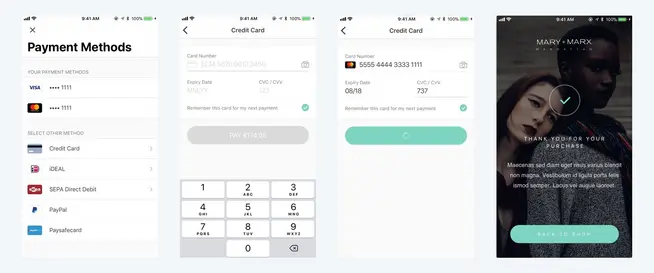
There are two different ways customers can verify themselves: frictionless and challenge. The frictionless flow is based on background information that doesn't require the customer to actively verify themselves. The challenge flow means the issuer has determined the transaction needs additional verification from the customer.
Frictionless
The SDK and servers exchange all necessary information without involving the user.
Challenge
The user receives a request to provide two-factor authentication. Typically through an SMS code or with a personal password. The user can also use their face or fingerprint to provide biometric authentication.
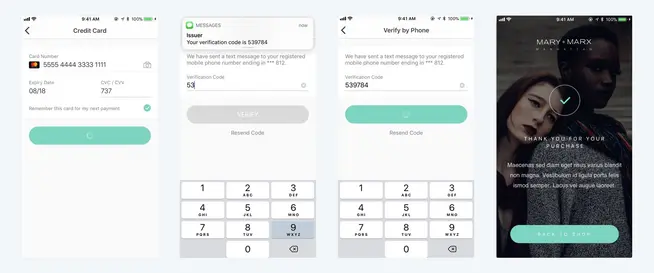
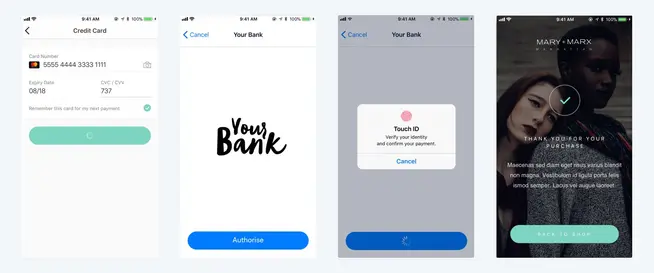
The payment is only confirmed after the customer verifies themself.
The transaction doesn’t only rely on card details for verification. This means committing fraud is much more difficult if card details are stolen or there is a data breach on the merchant’s site.
3D Secure and chargeback liability shift
Another benefit of this protocol is that it allows businesses to protect themselves from fraudulent chargebacks through a ‘’liability shift’’. Liability refers to the party responsible for financially compensating cardholders for fraudulent purchases.
A liability shift happens when a payment goes through the 3DS2 challenge authentication flow and the liability for fraudulent chargebacks shifts from the business to the card issuer.
In some regions, card schemes may grant a liability shift after a successful frictionless flow too.
FAQ
3D Secure (Three-Domain Secure) is an online card payment authentication protocol that acts as an additional security layer to verify cardholder identity. It works by establishing a secure communication link between the merchant's financial institution, the card network, and the cardholder's bank during checkout.