Article
Cross-border payments: A complete guide for businesses
Discover everything you need to know about cross-border payments, how they work, and the benefits of optimizing international transactions
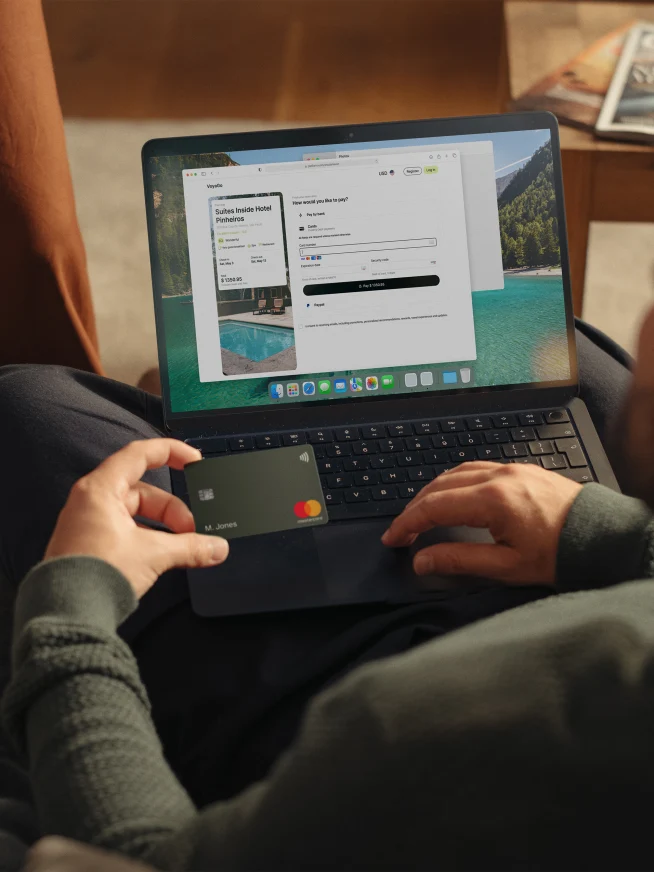
Cross-border payments are critical to expanding globally. Going beyond your local market is a great way to reach new customers and grow your business.
Managing cross-border payments was previously a complex process, but new solutions are emerging that make it easier and more efficient.
In this article, you’ll learn everything you need about cross-border payments, the different approaches to accepting them, and the best options for reducing costs, increasing authorization rates, and speeding up settlements.
This article includes:
What are cross-border payments?
Why are cross-border payments important?
Cross-border payment benefits
How to accept cross-border payments
How to save money with cross-border payments?
Keep cross-border payments simple with Adyen
What are cross-border payments?
Cross-border payments are transactions where the sender and the recipient are based in different countries. These payments allow businesses to trade internationally by transferring funds from one country to another.
Why are cross-border payments important?
Cross-border payments contribute to the development of the global economy and allow consumers to purchase beyond their local market. They’re also significant for industries focusing on international customers, such as travel and tourism or international trade.

Cross-border payment benefits
Accepting payments across borders includes benefits like:
Access to global markets: Businesses that accept cross-border payments can reach new customers in other markets and increase revenue.
Cost savings: Cross-border payments can offer cost-saving opportunities depending on your approach. Some options are more cost-effective than others, offering lower transaction fees.
How do cross-border payments work?
When someone makes a purchase, multiple parties work together to process the transaction. The payment typically goes from the customer to the business, then through the payment gateway, the local payment processor, the card payment network, and the customer's bank before it's approved or declined.
If the payment is approved, funds are transferred from the customer's bank account to the acquiring bank and then to the business's bank account.
Cross-border payments become more complex depending on how a business accepts them. The funds might go to a foreign or local acquirer before they reach a business account.
How to accept cross-border payments
There are different options for accepting cross-border payments. You can work with one acquirer, multiple local acquirers in other markets, or a global partner. Each option has different pros and cons.
Let’s take an example to show the different options:
You’re a Singapore-based business. A Malaysian shopper is attempting to buy something from your ecommerce site. The shopper enters their credit card details and selects Pay.
Now, let’s dive into how this works for each option.
Cross-border payments with one acquirer
Your Singapore-based acquirer "approaches" the customer's bank in Malaysia and requests transaction authorization. There's no need to set up a local entity in Malaysia as the whole thing is managed from Singapore.
This is a simple solution, but you may encounter some challenges. The Malaysian bank might not be familiar with this Singaporean acquirer, and perhaps the authorization request message contains data that the bank doesn't recognize. The bank wants to be safe and reduce risk by refusing the request.
Cross-border payments with local acquirers
Your local acquirer sends the customer's bank an authorization request. The request is seen as local and is perfectly formatted to meet that bank's specific requirements. The bank allows the payment to proceed, the acquirer releases the funds, and your sale goes through.
Locally processed transactions tend to generate higher authorization rates than cross-border transactions. However, having a local acquirer for every market you want to target can be complex, each with its own reporting set consisting of different formats and data elements, which makes reconciliation complicated.
Local acquiring with one global partner
The best solution is to have a single partner with local acquiring licenses in all the markets in which you operate. This means you get the simplicity of one partner and can view all transactions from across all regions, channels, and payment methods in the same place, making reconciliation a breeze. You'll also be able to utilize payments data to track performance, spot trends, and get to know your loyal customers.

How to save money with cross-border payments?
Transactions processed domestically are cheaper than cross-border payments, which usually have higher fees.
By setting up local entities, businesses can use local acquiring and process transactions domestically, reducing transaction costs by an average of 59%. As mentioned, this is a cheaper but more complex option.
Instead, businesses should work with a single partner with local acquiring licenses to make cross-border payments a cost-saving opportunity. This setup results in higher authorization rates, lower transaction fees, and faster settlement in each market.
Cross-border payments with Adyen
Adyen simplifies international expansion by providing local acquiring in key markets through one single platform. Instead of managing multiple bank relationships and contracts in different regions, you’ll use one integration to access global and local card schemes. This setup gives you the simplicity of one partner, while you still benefit from the higher authorization rates of local processing.
Our platform manages the complexity of currency conversion and local regulations for you. We provide detailed reporting that consolidates all your global transactions into one view, making reconciliation easy across different countries and currencies. Adyen helps you lower transaction costs and deliver a consistent payment experience to every customer, no matter where they are located.
Contact Adyen to learn how to optimize your cross-border payments and expand your business globally.
Keep cross-border payments simple with Adyen
It’s helpful to understand the benefits of cross-border vs. local acquiring and the different types of payout and billing models. But the ideal situation is to have a trusted payment partner to handle all this for you.
Adyen’s global acquiring solution is full-stack, meaning we take care of everything for your business, from authorization to settlement. Managing payments is easy when you only have one contract and one party to interact with to optimize your business performance.
Our direct connection to global and local card networks will allow you to benefit from local market conditions, improving authorization rates and lowering transaction fees.
We have local acquiring licenses across Europe, North America (including Canada), Brazil, Hong Kong, Australia, New Zealand, and Malaysia. And we’re adding new licenses all the time. Where we don’t have licenses yet, we team up with local partners to ensure you still get the benefits of processing locally. So, wherever you are and want to be, we have you covered.

FAQ
Domestic payments occur between a merchant and a shopper in the same country, while cross-border payments involve parties in different countries. Cross-border transactions often require currency conversion and involve higher fees and more intermediary banks.