Article
Tipping isn’t dead, but Gen Z is rewriting the rules
We surveyed over 1k American consumers to dig into what some are calling a "tipping recession."
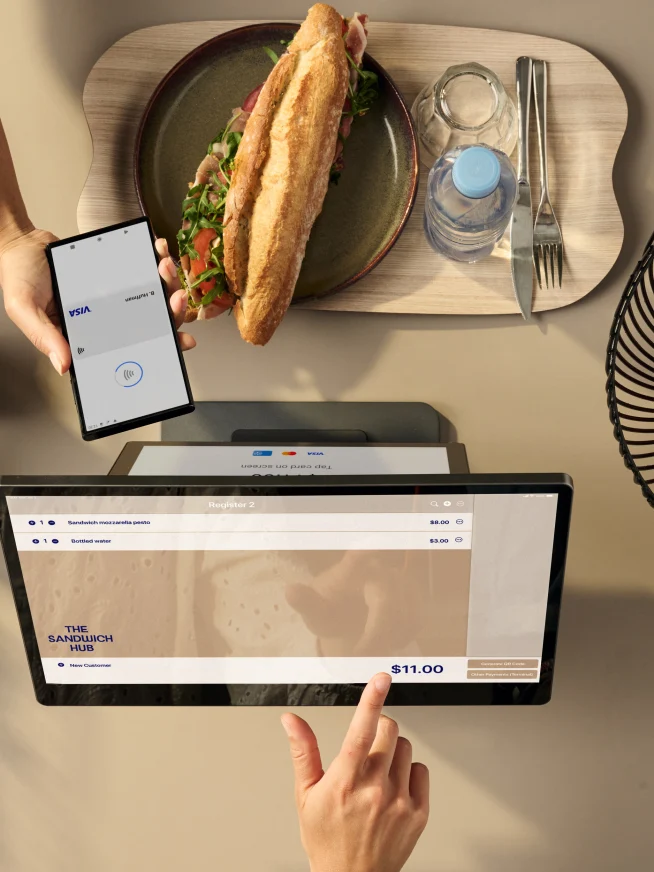
Despite headlines about “tipping fatigue,” Adyen’s latest survey reveals a more nuanced reality.
Most Americans haven’t reduced their tipping this year, but Gen Z and Millennials are reshaping when and why they tip—creating a generational tipping gap that matters for merchants.
It's what some are calling a “tipping recession.”
While 78% of consumers report tipping the same or more this year, Gen Z and Millennials are bucking the trend to rewrite the news on when and why they’ll tip, shifting long-standing norms.
Here’s what the data tells us, and what it means for merchants navigating changing customer expectations.
Tipping trends: A nuanced reality
The big picture: Tipping holding strong
78% of Americans report tipping the same or more in 2025.
Service still matters most. 73% say great service drives how much they tip, and 68% tip to support workers who rely on gratuities.
A generational divide emerges
33% of Gen Z and 28% of Millennials say they’re tipping less this year, compared to just 11% of Boomers.
Younger consumers bring different expectations shaped by digital payment experiences and evolving social norms.
Moments that spark generosity
Even with younger consumers tipping less on average, certain moments consistently inspire generosity:
Holidays: 73% of Americans say they would (or might) tip more during major holidays.
Extreme events: 71% tip more during disruptions like snowstorms, led by Millennials (76%) and closely followed by Gen Z (66%), and Boomers (65%).
Social dynamics
Guilt tips are real.
Findings show that 13% of Americans tip more when watched by the cashier, their friends, or even a romantic date.
Younger generations feel the peer pressure more with 27% of Gen Zs admitting they tip more under watchful eyes, compared to just 6% of Boomers and Gen X.
When technology meets psychology
Adyen’s data also highlights the intersection between digital payment design and tipping behavior.
Preset tip prompts: 23% of Americans tip less when shown pre-calculated options, and 17% tip less when asked for custom prompts.
Self-checkout remains a hard no: 64% of consumers refuse to tip at self-checkout prompts, signaling merchants need smarter strategies for when and how they ask for tips.
For merchants, the challenge is knowing when prompts inspire generosity—and when they create friction and fatigue.
What it means for merchants
Tipping is no longer one-size-fits-all. With Adyen’s platform, merchants can:
Customize tipping prompts across POS, online checkouts, and terminals.
Tailor experiences for different customer segments.
Encourage generosity at the right moments, while reducing friction for those less likely to tip.
Tipping in 2025 isn’t in crisis—it’s evolving.
Merchants that craft experiences that feel intuitive, contextual, and human, in line with customer expectations, will see stronger results.
Success lies in meeting customers where they are, using insights and payment technology to craft experiences that feel intuitive, contextual, and human.
Methodology
These findings are from a survey conducted by Adyen from August 13th to August 15th, 2025, among a representative sample of 1,001 online adult Americans who are members of the Angus Reid Forum. The survey was conducted in English. For comparison purposes only, a probability sample of this size would carry a margin of error of +/-3.10 percentage points, 19 times out of 20.