
Article
How to choose the best POS system for your business: A guide for enterprises
For operations, IT, and commerce directors who need more than a terminal with a bigger screen
In February 2026, Starbucks completed a payments rollout to 943 stores across three markets. 2,375 terminals went live, with 125 stores activated in a single week.
Starbucks demonstrates the power of a successful POS partnership. It shows why when an enterprise is looking for a new POS system, it needs more than just a terminal with a bigger screen.
If you’re offering in-person payments, it’s likely that one or more of the following challenges are familiar:
Your in-store and online payments run on different platforms with no single view of your customer. Reconciliation takes hours and your loyalty programme can't recognise shoppers across channels.
Managing your terminal fleet is challenging:
Pushing a configuration update across 50 locations means coordinating with individual stores.
A software issue in one site takes time to diagnose and fix remotely.
New location rollouts take weeks longer than they should.
You’re struggling to support different payment methods (like Alipay or Buy Now, Pay Later) at the point of sale and the methods you do support require a separate terminal.
If you lose connectivity, you stop selling.
To solve these challenges, you need a POS solution that matches your business needs now and as you grow.
This article will cover
What to look for in a POS provider
How to choose the right terminal for your vertical-by-vertical
How Adyen’s POS solution can help you manage in person payments at scale
Curious to see how our POS solution could help you grow your business efficiently? Get in touch.
What to look for in an enterprise POS solution
An enterprise needs a different POS solution from a small business. Here are a few key questions to ask to find the right one:
Can I see my POS and ecommerce payments in one place?
A cloud-based POS architecture means your in-person payments feed into the same dashboard as your online payments, making it much easier to support cross-channel journeys like:
Click and collect and cross-channel returns
Pre-order hotel welcome drinks online
Order a coffee in-app, collect in-person
Connected payments also give you a more complete picture of your customer data across all sales channels, feed straight into your CRM, and make reconciliation faster. Sales reports that combine in-store and online data give you a clearer picture of what's actually driving performance, rather than two partial pictures.
Connected payments don’t only make operations easier, they also improve loyalty. 52% of consumers say they would be more loyal to a retailer that lets them buy an out-of-stock item in-store and have it shipped to their home.
Can I manage my terminal fleet centrally?
Pushing a configuration update, diagnosing a software issue, or activating a new location shouldn't require coordinating with individual stores. The right provider lets you manage your entire terminal estate remotely from a single dashboard. A rollout that might otherwise take months can happen in weeks.
Can I support every payment method from a single device?
51% of consumers will abandon a purchase if they can't pay how they want. At enterprise scale, that becomes a significant conversion issue. This makes supporting your customers' preferred payment methods essential.
You should consider payment methods such as contactless cards,digital wallets, and BNPL methods.
It’s also worth considering whether any of your sites operate in areas with high tourist footfall. If so, can the provider also support international payment methods like Alipay and WeChat Pay for just those stores? How easy is it to switch these payment methods on and off by region?
Can it handle a sudden surge in volume, and keep working if a terminal goes offline?
A major sporting event, a product launch, or a peak trading period like Black Friday can multiply your normal transaction volume. A surge in transactions can lead to connectivity issues or system outages if your POS solution isn’t prepared. You want to ensure your provider’s infrastructure is tested and proven at scale, and that they can continue capturing transactions even if connectivity is temporarily lost.
Will I get onsite support when I need it?
A large-scale terminal rollout across multiple locations is a complex operation. The best providers don't hand off after integration; they have implementation managers who work onsite to get locations live quickly and correctly. Beyond that, they should be invested in your continued success, help implement improvements and address issues as they arise.
How much can I customise the terminals?
Your POS setup should be able to reflect your brand and operational needs, whether that means integrating your loyalty programme into the terminal flow, customising receipt logic, or building bespoke payment screens without additional development work each time. A user-friendly interface matters too, both for your staff and your customers. Third-party integrations with your existing tills, CRM, or inventory management systems shouldn't add friction.
Which POS solution is right for your business?
The right POS setup looks different depending on how and where you operate. Here's what to prioritise by vertical, with Adyen terminals used as examples throughout.
At a glance: POS solutions by vertical
Retail
Recommended form factor
mPOS + countertop
Must-have payment features
Contactless, digital wallets, BNPL, Tap to Pay
Key integration
Unified in-store/online data
Watch out for
Siloed channels that block cross-channel returns and loyalty
Food and beverage
Recommended form factor
Rugged mobile (e.g. Adyen S1EF Pro)
Must-have payment features
Tip handling, split bills, offline resilience
Key integration
Order and kitchen management system
Watch out for
No fallback when connectivity drops mid-service
Hospitality
Recommended form factor
Countertop + mobile
Must-have payment features
Pre-auth, international wallets (e.g. Alipay, WeChat Pay), multi-currency
Key integration
Property management system
Watch out for
Separate online and on-property systems creating fragmented guest data
Beauty and wellness
Recommended form factor
Docked/mobile combo (e.g. Adyen S1F4 Pro)
Must-have payment features
Contactless, recurring and deposit billing
Key integration
Booking and appointment system
Watch out for
Fixed terminals that interrupt the service experience
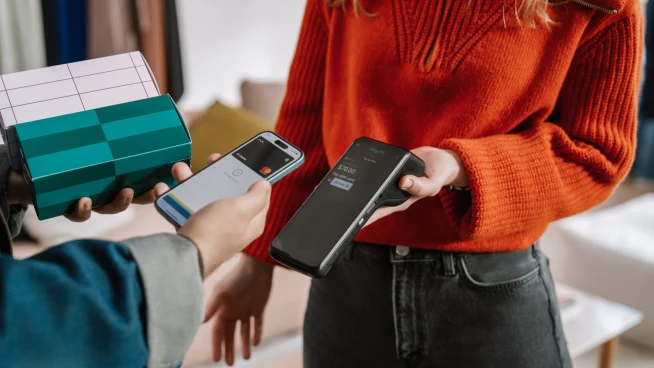
Retail: Connected channels and queue busting
As a multi-location retailer, connecting your in-person and online stores is essential to let shoppers move easily across channels, build a more complete view of your customers, and drive customer engagement through loyalty programmes that work across every channel.
When it comes to the shop floor, you’ll want flexible solutions that help cut queues such as mobile point of sale. Lush, for example, deployed mPOS across all its UK stores. As Adam Goswell, Tech R&D Principal at Lush, put it: "Mobile solutions allow us to engage with customers directly where they are, eliminating queues, and transforming our service approach."
Another consideration will be Tap to Pay, which turns any compatible Apple or Android device into a terminal. This is great for pop-ups or when you need to boost your POS capabilities during peak periods. For example, retailers using Tap to Pay on iPhone saw 177% volume growth on Black Friday year-on-year.
It's also worth considering how your terminals handle gift cards, since retailers running multi-location gift card programmes need redemption to work consistently across every store, not just the one where the card was purchased.

Food and beverage: Speed, resilient hardware, and offline processing
If you're managing a chain of restaurants or cafés, your operational priorities are likely speed, resilience, and mobility. Terminals need to handle tip pre-sets, split bills, table management, and tableside payments.
Hardware is also an important consideration. Card readers in a busy kitchen environment or a high-volume café service need to be physically resilient. Our S1E4 Pro, for example, is IP-65 rated for spill and dust resistance and drop-proof to 1.5 metres, with an all-day battery built for continuous use.
For sites that print physical receipts, an integrated receipt printer removes the need for separate hardware at the till, which is one less thing to maintain across a large estate.
And finally, connectivity resilience is vital. A terminal going offline mid-service means lost revenue with no recovery unless your provider has a fallback. Starbucks, for example, has had over 45,000 transactions protected by our Store and Forward feature since August 2025.

Hospitality: Connected payments and local methods
For hotels, the payment journey doesn't start at check-in and end at check-out. It spans online booking, pre-authorisation on arrival, on-property spend across bars, restaurants, and spa facilities, and final settlement (often days later). But, according to our latest Hospitality Report, 72% of businesses say fragmented payment systems are inefficient and time-consuming. And 74% believe a lack of centralised payment data hinders their ability to innovate and control costs.
B&B Hotels experienced this first-hand. With different payment systems running in different countries, guests had to re-enter payment details at each property and staff had no cross-property view of guest preferences. As Vincent Deriot, CTO of Innovation at B&B Hotels, said: "It was important for us to have a partner who could help us merge all of our payment transactions and help us offer the smoothest and simplest experience possible."
Another priority for hotels is welcoming guests from around the world. This means accepting the preferred payment methods. And, ideally, you can add these to your existing terminals as needed, without further integration or additional hardware.

Beauty and wellness: Discreet, flexible payments
In salons, spas, and wellness studios, the payment moment should be as unobtrusive as possible. QC Terme, a spa and thermal centre group captures this well: "We don't want to think about paying for things. We want to think about the experience that we're getting."
Payment method flexibility is equally important in this vertical. As beauty and wellness marketplace, Fresha, has found, clients in premium salons increasingly expect to pay with the card or wallet they prefer, and any gap in coverage is noticeable at precisely the wrong moment.
For the hardware itself, a terminal that docks as a countertop device but can also operate untethered on the floor (with an integrated printer for those who want a receipt) suits the appointment-led, relationship-focused nature of this vertical. Adyen's S1F4 Pro is built for exactly this kind of flexibility.
How Adyen approaches in-person payments at enterprise scale
For large businesses, it's not just about putting a terminal on a counter; it's also about managing a fleet of thousands across multiple markets, connecting every in-store transaction to your online data, and having engineers on the ground when you need them.
Adyen processes in-person payments for some of the world’s biggest brands. We also partner with platforms like Lightspeed, processing payments for 70k merchant locations across 70 countries on the same platform. So we truly understand scale.
Here’s what you can expect if you partner with us:
Connect every transaction on a single platform
Running separate providers for in-store and online payments means fragmented data, manual reconciliation, and loyalty programmes that only tell half the story. Adyen processes in-person and online payments on a single platform, giving you a unified view of every customer transaction, automatic reconciliation across channels, and loyalty programmes that recognise shoppers whether they bought in-store or online. For finance teams managing multiple locations and markets, that alone makes month-end easier.
"We have a unified approach and are truly omnichannel between our point of sale payments and online." Mike West, Finance Director, Lush
Accept more payment methods and keep selling when connectivity drops
Maintaining separate terminals for different payment methods creates operational complexity that scales badly across a large estate. Adyen terminals support contactless, Apple Pay, Google Pay™, Klarna, Clearpay, Alipay, WeChat Pay, and UnionPay, with no separate hardware or additional integration required per method. With ourTerminal API you can switch payment methods across an entire estate simultaneously, or just selected sites.
"Whether turning on Apple Pay or integrating Clearpay, it's almost like a tick-box exercise. Adyen makes it easy and efficient to expand our payment options without the complexity." SJ Grabiec, Global Head of Customer Experience, AllSaints
Stay live through your busiest moments
A surge in demand is exactly when downtime is most costly, and exactly when many systems are most likely to buckle. Our infrastructure is built to handle that kind of pressure. During Black Friday/Cyber Monday 2025, we processed 837 million transactions while maintaining 99.9999% uptime.
And, if a terminal loses connectivity, you don’t have to lose the sale. Our offline payment function captures the transaction and processes it automatically when the connection returns. This feature saved our top 10 merchants 2 million transactions and $42.1m in revenue in a single year.
Manage your terminal fleet centrally
Without centralised tooling, keeping a large terminal estate up to date means coordinating with individual stores, which is a significant and recurring FTE burden. Our Terminal Fleet Manager lets you push software updates, adjust configurations, and monitor terminal status across every location from a single dashboard, lowering FTE costs by up to 75%. This helps you move fast. For example, Kiko Milano rolled out 5,000 terminals globally in under two months.
Get implementation support that can accommodate your scale
A large-scale terminal rollout is only as good as the team behind it. Adyen's Terminal Field Services team works onsite during deployments with implementation managers alongside your team for the duration. And because we operate as a single global team with offices in major cities around the world, that support is consistent whether you're rolling out in London, New York, or Singapore. There's no handoff to a local partner, no inconsistency between markets, just the same team, with the same standards, wherever you're going live.
It’s thanks to this support that Starbucks awarded us the UK Project of the Year at their Next Gen Payments Award. As John Elliott, VP Technology EMEA put it: "Our partnership with Adyen ensures that our payment technology is just as robust as our service. This stability allows our teams to stay focused on our guests and the coffee they love, without technical issues getting in the way."
Beyond the terminal: Choosing a POS partner for the long term
Choosing a POS solution is rarely just a hardware decision. At enterprise scale, it's a question of infrastructure. It affects how your data flows, how your teams operate, how your customers experience your brand, and how quickly you can move when you need to open a new location, enter a new market, or switch on a new payment method.
The businesses that get the most from their in-person payments setup ask more of their provider: Not just reliable hardware, but a platform that connects every channel, tooling that removes operational overhead, and a team that shows up when it matters.
If you're evaluating your current setup we'd love to help. Get in touch to see how our in-person payment solution can help you grow faster and more efficiently.
Best POS system FAQs
The right POS for a restaurant depends on your operation, but your priorities are likely to be: speed, resilience, and mobility. Look for terminals that can handle tip pre-sets, split bills, and tableside payments, are tough enough for a busy kitchen or service environment, and keep working even if your connectivity drops. For multi-site restaurant groups, the ability to manage your entire terminal fleet centrally (rather than by location) is also a consideration.