Article
The $50 billion question: Fix these 5 challenges to win the UAE remittance race
In this blog, discover the key frictions holding MTOs (Money Transfer Operators) back and the payment solutions that can help turn them into growth opportunities.

The UAE ranks as the second-largest hub for outbound remittances globally, just behind the United States.In 2024 alone, outward remittances reached AED 183 billion - roughly $50 billion - flowing primarily to India, Pakistan, the Philippines, Egypt, and Bangladesh.
That's a staggering volume. And it's growing. But behind those numbers sits a market under real pressure: the UAE's remittance industry is having significant push towards supporting the underbanked population through digitization, and technology adoption.
Here's how the biggest challenges in UAE remittance today map directly to solutions that already exist.
Challenge #1: Too many failed and abandoned transactions

Transaction fees for cross-border payments in the UAE can range from AED 30 to AED 100 per transaction depending on the provider, and that's when the transaction actually goes through. Failed payments, unsupported methods, and clunky checkout flows cause customers to drop off entirely. In a market where trust is everything, one bad experience can mean losing a customer who sends money home every single month.
The Adyen solution: Higher approval rates through AI-driven payment optimization and smart routing. One platform. Fewer failures. More transfers that actually complete.
Challenge #2: Customers can't pay the way they want
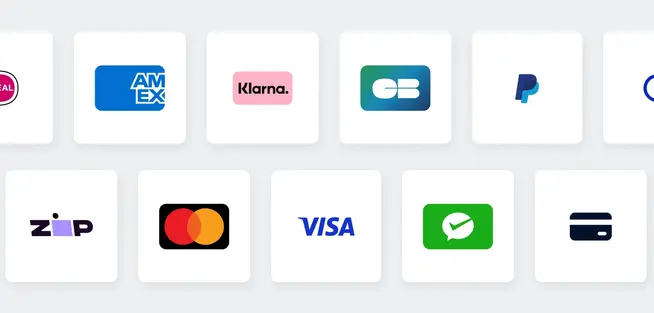
As of 2024, 46% of the UAE population uses mobile wallets such as Apple Pay, Google Pay, and Samsung Pay for daily purchases - yet many remittance providers still don't support them at checkout. Meanwhile, 57% of remittance users in the UAE already send money abroad using digital platforms, and that number is climbing fast.
If a customer can't use their preferred payment method, they won't use your platform. It's that simple.
The Adyen solution: Support for a wide range of global and local payment methods - wallets, cards, bank transfers - across every channel. One flow across every touchpoint, online, in-app, or in-person.
Challenge #3: Fraud risk that can't be managed
As digital volumes scale, so does fraud exposure. Blanket rules block legitimate customers. Loose rules let bad actors through. Remittance providers need precision, not guesswork.
The Adyen solution: Customizable fraud control with action-based rules, precise data, and machine learning. Providers can simplify detection, label rules to separate fraud from genuine business decisions, and keep the experience frictionless for real customers - as Careem Pay put it in their own words: keeping every transfer easy, affordable, and seamless.
Challenge #4: Regulatory complexity is slowing growth
The UAE Central Bank raised standards significantly in 2021 to combat illicit financial flows, introducing stringent measures and penalties totalling AED 17.31 million for non-compliance.
The Adyen solution: A platform built only for regulated financial movement, with compliance and authorization infrastructure embedded from day one.
Challenge #5: Operations are fragmented across systems
More than 100 exchange houses operate in the UAE, all competing for the same remittance customers.Many of them are running disconnected systems for payments, reporting, and reconciliation - creating blind spots and operational drag exactly where speed matters most.
The Adyen solution: Unified data and reporting in one place. Simplified settlement. Full visibility across every transaction, without the patchwork.
The Bottom Line
Digital transformation in UAE remittance isn't a future ambition. It's a present-day competitive necessity. The providers that will win aren't the ones with the lowest fees or the flashiest app - they're the ones whose infrastructure is strong enough to handle every customer, every payment method, and every market without breaking a sweat.
Every challenge in this market has a solution. The question is whether you're building on a platform that can deliver all of them.