Article
Agentic commerce and control: Getting the balance right
How to navigate AI-led buying while retaining ownership of your customer relationships and data.
Latest news
Are your product feeds ready for Agentic?
A question we get asked time again is: "How can I be sure my products will show up in AI search?"
Most retailers already have some kind of product feed (in your PIM system, commerce platform, Google Merchant feed, or a combination of all three). But that doesn't make your feed ready for AI. To help you out, we've put together a practical guide for optimizing your product feeds. This will help you uncover where your gaps are, how to coordinate across teams to close them, and how to build foundations you can adapt as platforms evolve.
New: Agentic Commerce Hub
With things moving so fast, it can be hard to stay on top of it all. So we've created a centralized agentic commerce hub page as our single source of truth.
Agentic commerce newsletter
Want the latest updates direct to your inbox? Join our agentic commerce newsletter >
The core challenge: participating without losing control
Agentic commerce is moving quickly.
Technology leaders like OpenAI, Google, Mastercard, and Visa are building the infrastructure and APIs that allow AI agents to participate in purchase decisions in real time. Businesses are beginning to test new buying flows, and consumers are becoming more comfortable delegating parts of the shopping journey to bots.
What hasn’t changed are expectations. People still expect great customer experience, security, transparency, and clear accountability.
For businesses, the question isn’t whether agentic commerce will arrive. It’s how to participate without giving up control, ownership, or trust.
That raises practical concerns:
If AI initiates purchases, who owns the customer relationship and the end-to-end journey?
How do businesses avoid becoming interchangeable fulfillment layers, competing only on price and speed?
What happens to risk, liability, and accountability as automation and workflows scale across multiple AI tools, without sufficient guardrails?
At Adyen, we take a merchant-first approach. As agentic commerce evolves, our focus remains the same: helping businesses build infrastructure that can adapt as AI-powered technology evolves.
In this article, we’ll cover:
How agentic commerce reshapes control across the buyer journey
The structural realities businesses need to design for
What businesses need to do now to prepare
How we’re building a merchant-first foundation for agentic commerce
What is agentic commerce?
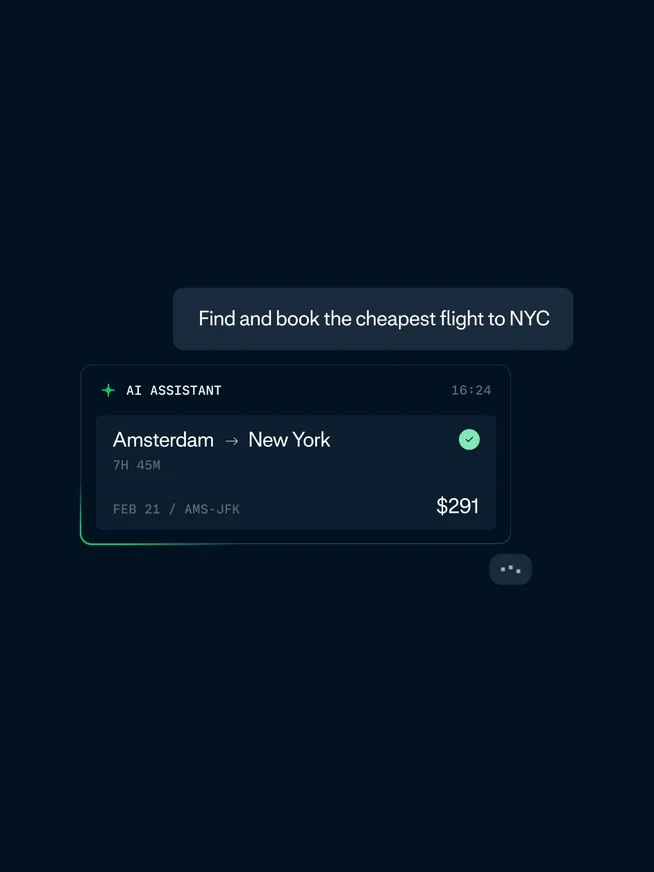
Agentic commerce refers to shopping experiences where AI agents don’t just recommend products, but act on a shopper’s behalf via natural language interfaces like chatbots operating across systems, APIs, and payments infrastructure.
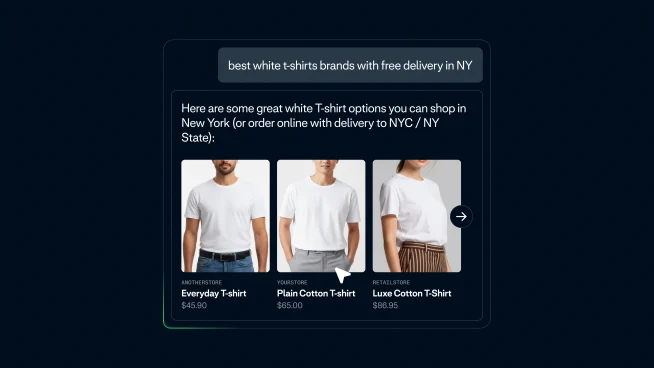
That can include discovering offers through product discovery, comparing options using enriched product data and metadata, decision-making with limited human input, and, in some cases, making complete purchases under a defined mandate using permissions.
Five agentic commerce realities businesses can’t ignore
1. Nothing about agentic commerce is settled yet. That’s the risk
Agentic commerce is still in flux. Multiple models are emerging in parallel, and interfaces are changing (chat, voice, hybrid). Standards, agentic commerce protocol discussions, and use cases continue to evolve. Adoption and regulatory expectations also vary by region.
With so many variables in motion, the risk is moving too fast and locking into early assumptions that are expensive to unwind.
2. Whoever owns intent owns the customer
Many businesses have seen this pattern with marketplaces, app stores, and aggregators.
When an intermediary controls discovery, decision-making, and checkout, brands can fade into the background.
If a third-party defines what the agent is authorized to do, sets the limits, and holds the proof of purchase, they don’t just facilitate the transaction. They own the customer relationship.
And this rarely happens all at once. It happens through closed integrations, platform-owned mandates, and agent-specific payment flows.
3. Visibility in AI-driven discovery is engineered, not guaranteed
AI agents rely on fresh product data and compliant metadata to access or interpret your catalogue. Otherwise, you’re effectively invisible.
That means “offer data” becomes core infrastructure. Pricing, availability, eligibility and policies need to stay current. Compliance details matter too; disclosures, restrictions and cancellation terms. AI platforms also treat freshness as a trust signal, which influences what gets surfaced.
4. Payments may be the only consistent connector you have across AI interfaces
As shopping moves into AI-driven interfaces, traditional recognition signals weaken. Logins become less central. Cookies lose relevance. Shoppers may move between multiple agents, which can fragment sessions even further.
One element remains consistent: payment data. Through tokenization, payments can become the thread that reconnects the customer to your brand, regardless of where the transaction starts.
5. When buying is automated, mistakes scale too
Fraud is already changing fast, and many businesses invest heavily in reducing disputes, preventing chargebacks, and protecting legitimate customers from false declines.
Agentic commerce increases that pace. When purchases happen at machine speed, errors, abuse, and fraud detection issues scale faster too. That changes what you need from your risk and compliance foundations, including:
Fraud systems that can distinguish authorized agents from malicious automation
Clear liability frameworks
New compliance workflows as rules evolve
What to focus on now (without locking in too early)
The priority is to participate without locking into assumptions that may not hold. Instead of rebuilding your systems or betting big on a single ecosystem, focus on foundations you can adapt.
1. Prepare offer data for AI-led discovery
Regardless of how quickly agentic checkout scales, it’s worth making your product feeds easy for machines to read and trust:
Ensure your catalogue supports AI-driven discovery and product recommendations by maintaining structured, machine-readable product data.
Keeping pricing, availability, and eligibility signals up to date.
Make policies clear: cancellations, refunds, returns, restrictions.
Prepare to support multiple AI discovery surfaces (ChatGPT and Google).
2. Design for flexibility
Build in a way that lets you adapt as standards evolve:
Avoid making agent or platform-specific checkout logic that limits interoperability across AI platforms and service providers.
Be cautious of tokens, credentials, or mandates that only function within a single ecosystem.
Minimize parallel integrations that fragment customer data, risk logic, and ownership.
If you need to unwind or replace a protocol in six or 12 months, you should be able to do so without breaking loyalty, subscriptions, customer recognition, or core payment logic.
3. Decide now who owns customer intent
In agentic commerce, intent is delegated. Define it explicitly:
Define what actions an agent is allowed to take, what permissions apply, and how mandates are enforced.
Set limits around spend, frequency, and context.
Keep a clear, auditable record of that authorization.
4. Treat payment data as a relationship asset
As journeys fragment, payment data becomes a key touchpoint. In practice, that means payment tokens shouldn’t be locked into a single interface, agent, or platform. Portable tokens help you recognize customers across channels, even as interfaces change.
5. Align teams early
Agent-led purchases affect fraud, risk, marketing, product, and support across the backend and frontend.
Bring teams together early to align on:
How agent-initiated purchases affect loyalty and recognition.
What customer data is shared across teams.
How refunds, disputes, cancellations, and support work when an agent is involved.
Who owns accountability when automation fails.
This is governance, not just operations.
How we’re building for agentic commerce
Our approach is grounded in a simple idea: agentic commerce is a new channel, not a new owner of the customer relationship.
Agentic commerce may be new, but the foundations that make commerce reliable don’t need to be rebuilt. Adyen’s single platform, global banking infrastructure, and Dynamic Identification capabilities bring payments, risk, authentication, and data altogether in one place.
We’re extending those same trusted foundations into AI-led interfaces, so businesses can adapt without giving up control.
Here’s what you can expect by partnering with us:
Build once, adapt as the ecosystem changes
Rather than duplicating integrations for each new agent or protocol, you can connect once and accept payments from multiple authorized AI surfaces as they emerge. This helps you avoid early lock-in and reduces rework. Keep control of intent and liability by owning the mandate
Delegation shouldn’t mean surrender. Businesses should be able to set clear limits, enforce permissions and retain an auditable record of authorization.
That’s how you keep control of the relationship, and keep accountability clear.
Think of Adyen as a universal translation layer. We translate the complex, fragmented protocols of OpenAI, Google, and new agents into the standard payment language your infrastructure already speaks. You connect once to us, and we handle the translation to every new agent.
Preserve continuity using payments as the connective layer
With merchant-owned payment data and tokenization, you can recognize customers even when purchases are initiated by AI agents. This helps keep subscriptions, service, and post-purchase flows working as expected.
Support open standards and ecosystem collaboration
We’re investing in the infrastructure required for agentic commerce to scale responsibly, including:
Payment support for AI commerce surfaces from OpenAI, Google, and Microsoft (currently in pilot phases).
Merchant-owned agentic checkout for businesses building commerce experiences into their own AI assistants.
Collaboration with card networks like Visa and Mastercard on agent-ready token standards designed for delegated, automated transactions.
Ongoing investment in product feed simplification to surface accurate pricing, availability, and eligibility across AI-led discovery.
Extending fraud and risk frameworks to distinguish authorized agents from malicious automation and support accountability at scale.
We’ve also joined the Agentic AI Foundation (AAIF) to support open, interoperable standards, and reduce the risk of a closed ecosystem.
Read more about how we’re building a merchant-first foundation for agentic commerce >
Decisions today that shape who owns the customer tomorrow
Agentic commerce signals a shift in how people purchase products, but the fundamentals still matter. And, while it still has a long runway, the decisions that determine who owns the customer are already being made.
Businesses are navigating real trade-offs, such as:
Autonomy vs. control
Speed vs. accountability
Short-term optimization vs. long-term leverage
The winners won’t be the first to automate everything. They’ll be the ones that build foundations that preserve ownership, accountability, and flexibility as the ecosystem evolves.
Our role has always been, and will continue to be, to empower businesses to navigate change without giving up control. As agentic commerce takes shape, we remain committed to a merchant-first approach that puts ownership, trust, and adaptability at the center.
Want to explore what a merchant-first approach to agentic commerce could look like for your business? Get in touch to learn more.
Agentic commerce FAQs
An agentic commerce protocol is a set of technical and operational rules that define how AI agents are authorised to act on a shopper’s behalf, how payments are executed, and how intent, consent, data, and liability are handled in delegated transactions. The priority is not choosing a single protocol early, but making sure your payments and risk infrastructure can support multiple protocols over time.