Article
Cross-border payments: A complete guide for businesses
Discover everything you need to know about cross-border payments, how they work, and the benefits of optimising international transactions
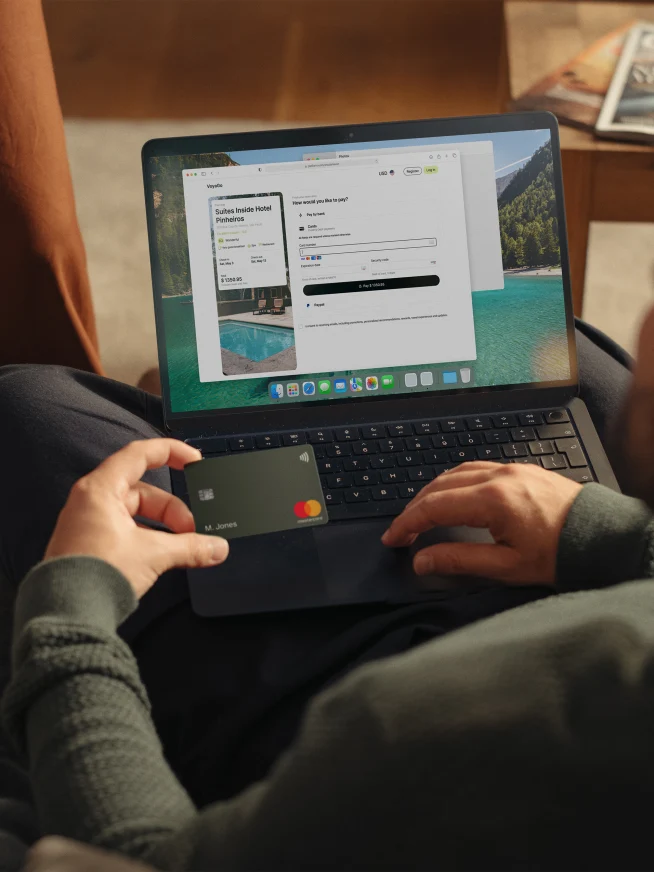
Cross-border payments are transactions where money is sent from one country to another. These involve individuals, businesses, or financial institutions transferring funds internationally.
Cross-border payments are crucial for businesses looking to expand their reach and tap into global markets.
While managing international transactions can be complex, new solutions allow companies to optimise these payments for higher authorisation rates, lower costs, and faster revenue growth.
In this article, you’ll learn:
What are cross-border payments?
How cross-border payments work
Cross-border payments regulation
Cross-border payments challenges
Cross-border payment benefits
The difference between local and cross-border acquiring
Cross-border payment optimization
How to improve authorization rates for global sales
Future of cross-border payments
Cross-border payments with Adyen
Cross-border payments: what are they?
Cross-border payments are transactions where the sender and the recipient are based in different countries. These payments allow businesses to trade internationally by transferring funds from one country to another.
How cross-border payments work
Cross-border payments function by routing transaction data and funds through a network of financial institutions across different countries.
When a shopper in one country buys from a business in another, the payment must pass through several stages to handle currency conversion and regulatory compliance. This process involves the merchant, a payment gateway, an acquirer, card networks, and the shopper's issuing bank.
This is the typical flow of a cross-border transaction:
The shopper selects their items and enters payment details at the digital or physical checkout.
The payment gateway encrypts the data and sends it to the acquirer.
The acquirer identifies the transaction as cross-border and sends the request to the relevant card network.
The card network routes the authorisation request to the issuing bank in the shopper's home country.
The issuing bank verifies the funds and checks for potential fraud before approving the request.
The approval moves back through the card network to the acquirer and finally to the merchant.
Funds are converted to the merchant's settlement currency and deposited into the business account.
While this process happens in seconds for the shopper, the backend settlement can take several days as funds move between intermediary banks. Using a single partner with local licenses can reduce these delays and minimise the fees associated with international transfers.
Cross-border payments regulation
The shift from Payment Service Directive 2 (PSD2) cross-border payments to the updated PSD3 framework has improved data sharing and consumer protection across borders.
Under the Instant Payments Regulation, Single Euro Payments Area (SEPA) cross-border payments must now be processed instantly, ensuring transfers are as fast as domestic ones. These mandates have significantly reduced fraud and eliminated the traditional hidden fees of global banking.
For businesses, this regulatory clarity means lower costs and predictable, real-time settlement.
The difference between local and cross-border acquiring
The difference between cross-border and local acquiring models lies in how a business structures its international payment processing.
Following are the benefits and the cross-border payments challenges of each:
Cross-border acquiring
In a cross-border acquiring model, a business uses a single central entity in its home country to process payments from multiple international markets through one acquirer.
The benefit: It offers a simplified management structure with a single point of integration.
The challenge: It frequently results in lower authorization rates. Because the transaction originates from a foreign country, issuing banks are more likely to flag it as high-risk or unfamiliar, leading to higher decline rates.
Local acquiring
In a local acquiring model, the business uses local entities or partners with domestic licenses in every market where they operate.
The benefit: Since the transaction is processed as a domestic payment, local banks recognize the acquirer and the transaction format. This results in higher approval rates, fewer declines, and significantly lower interchange fees.
The challenge: This model requires more complex administrative oversight to manage multiple local relationships and legal entities.
Cross-border payment optimisation
Optimising cross-border payments helps businesses reach new markets and increase revenue.
Businesses can provide familiar experiences to shoppers by offering local payment methods, leading to higher conversion at checkout.
Better optimisation also leads to significant cost savings.
Traditional cross-border payments often involve high transaction fees and unfavourable currency exchange rates. Moving towards local processing reduces these costs and speeds up the time it takes for funds to reach the business bank account, which improves overall cash flow.
The future of cross-border payments: Real-time cross-border payments
The global shift towards real-time cross-border payments is transforming payments into an instant experience no matter the time of day.
By leveraging ISO 20022 standards and interlinked Real Time Payments (RTP) networks like SEPA cross-border payments, transactions now settle in seconds rather than days.
For businesses, this means instant settlement, drastically improving cash flow and operational efficiency.
Cross-border payments with Adyen
Adyen simplifies international expansion by providing local acquiring in key markets through one single platform. Instead of managing multiple bank relationships and contracts in different regions, you’ll use one integration to access global and local card schemes. This setup gives you the simplicity of one partner, while you still benefit from the higher authorisation rates of local processing.
Our platform manages the complexity of currency conversion and local regulations for you. We provide detailed reporting that consolidates all your global transactions into one view, making reconciliation easy across different countries and currencies. Adyen helps you lower transaction costs and deliver a consistent payment experience to every customer, no matter where they are located.
Contact Adyen to learn how to optimise your cross-border payments and expand your business globally.
Key summaries
Cross-border payments involve transferring funds between parties in different countries.
Local acquiring increases authorisation rates by making international payments appear domestic to local banks.
Using a single partner for global payments simplifies reconciliation and reduces administrative work.
Offering local payment methods is essential for converting shoppers in new markets.
Optimisation reduces transaction fees and helps businesses settle funds faster.
FAQ
Domestic payments occur between a merchant and a shopper in the same country, while cross-border payments involve parties in different countries. Cross-border transactions often require currency conversion and involve higher fees and more intermediary banks.