
Article
Agentic commerce: Between discovery and decision
How retailers can balance AI-driven discovery with trust, control, and conversion.
Agentic commerce has moved beyond just theory. Shoppers are already using AI-driven discovery to find products, narrow their choices, and decide where to buy. But the industry is still in transition.
Right now, AI in retail is between two stages. On one side, conversational commerce is where AI helps shoppers find products while humans ultimately make the final purchase decision. On the other side, fully autonomous agents search, decide, and transact on a shopper's behalf.
Its not about choosing between the two, but rather preparing for both at the same time. See Adyen’s guide on building a merchant-first foundation, to take a deeper look at the preparation needed.
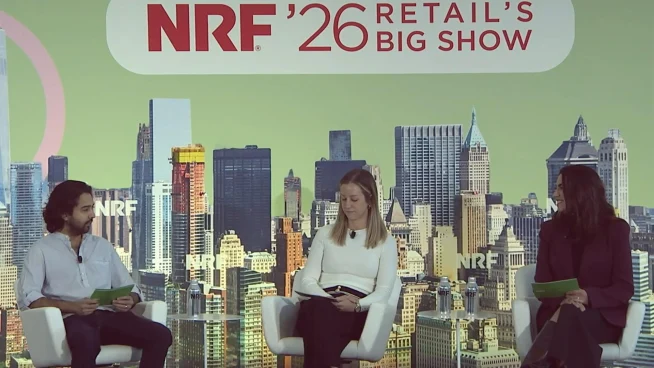
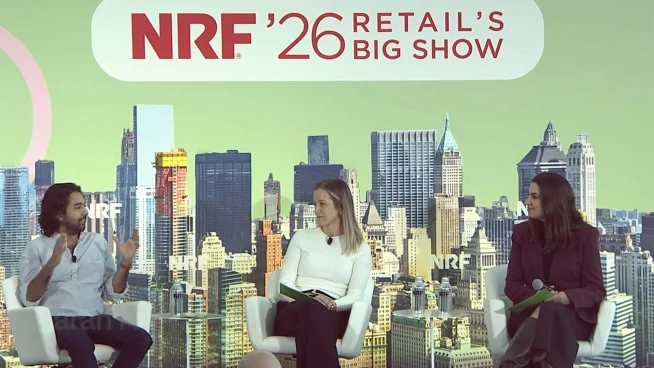
Balance was a central theme of a recent panel at NRF 2026. With leaders from VF Corporation (parent company of brands such as The North Face and Vans), OpenAI, and Adyen, here’s what they discussed.
Discovery has changed, but purchase hasn’t disappeared
One of the clearest shifts discussed was how consumers are starting their shopping journeys.
“We’re moving from a place where shoppers would search based on keywords and categories to shoppers searching based on intent,” said Yelena Reznikova, who leads B2B Partnerships at OpenAI. “Half the time, shoppers don’t even know what they’re looking for.”
Instead of filtering through product lists, shoppers are increasingly asking conversational questions, What should I wear? What’s best for this trip?, and relying on AI to guide early discovery. Platforms like ChatGPT are becoming a new top-of-funnel channel, surfacing personalised results and directing high-intent traffic to merchants.
“The traffic that we’re able to surface and drive from these chats is very high-quality, high-intent shoppers that actually convert up to two to three times better than typical search traffic.”
Yelena Reznikova
B2B Partnerships, OpenAI
What hasn’t changed is the need for trust at the moment of purchase. Discovery may begin in an LLM, but conversion still depends on familiarity, confidence, and reassurance, especially when money and personal data are involved.
Opportunity and risk arrive together
For brands, agentic commerce opens a powerful new channel, but one that also comes with real trade-offs.
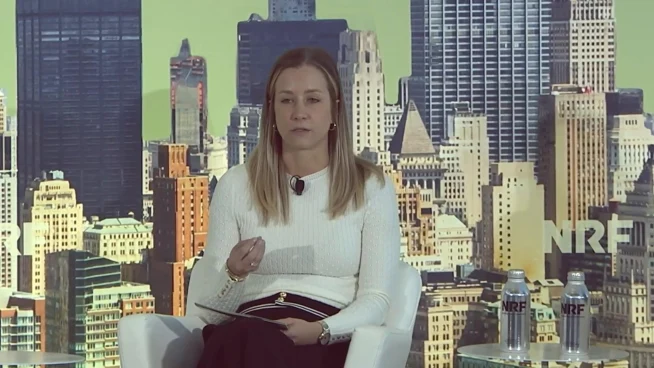
“Yes, this is another way to reach consumers at moments of high intent,” said Kate Thomas, Senior Director, Global Digital Product & Experience Design at VF Corporation. “But we’ve worked incredibly hard to build our consumer relationships.”
Thomas pointed to the emotional connection shoppers feel when they walk into a brand’s store or land on a familiar website, a connection that risks being diluted when discovery happens in a neutral chat interface.
“When you walk into a store or land on a brand’s website, you feel something. We want to make sure we don’t lose that,” noted Thomas.
That tension defines the current moment. Agentic commerce can increase reach and relevance, but only if businesses remain recognisable, trusted, and in control of the experience.
“Retailers aren’t worried about whether agentic commerce will drive demand, they’re worried about who owns the relationship, the data, and the risk when that demand shows up.”
Karan Katyal
VP of Digital Commercial Strategy, Adyen
Humans are still in the loop, and that matters
Despite growing excitement around fully autonomous agents, the panel agreed: today’s implementations still rely on human decision-making. “We’re still a little bit away from autonomous agents kind of scouring the internet and making purchases on users’ behalf,” Reznikova said.
For now, the focus is on capturing intent and routing shoppers to the right merchants at the right moment. And the foundation for that routing is data.
Reznikova noted, “Having really structured, clean data in product feed allows us to capture that intent and route it to the appropriate merchant.”
While volumes remain relatively small today, the signal is clear: agent-driven discovery is changing where intent forms. For retailers, the priority isn’t chasing traffic spikes. It’s building the foundations that let them capture that intent reliably while keeping checkout, loyalty, identity, and risk management firmly under their control.
Friction is the real conversion risk
As discovery improves, friction becomes more visible—especially at checkout.
“If you find what you’re looking for and then you have to link out to a brand’s website to get there, that’s the moment of friction where you have a moment to second guess what you’re doing"
Kate Thomas
Senior Director, Global Digital Product & Experience Design, VF Corporation
Reducing friction doesn’t mean rushing toward autonomy. It means designing secure, seamless handoffs that preserve confidence at the moment of intent, while maintaining safeguards around payments, fraud, and data privacy.
Consumers themselves remain divided on how comfortable they are with AI-driven shopping experiences, particularly when sensitive data is involved. That uncertainty reinforces why trust, security, and brand integrity are non-negotiable, even as experimentation continues.
The long view: Autonomy, interoperability, and trust
Looking further ahead, the panel surfaced deeper questions about scale and structure.
What happens when agents operate across platforms, geographies, and regulatory regimes? How do brands avoid fragmentation while preserving choice and control?
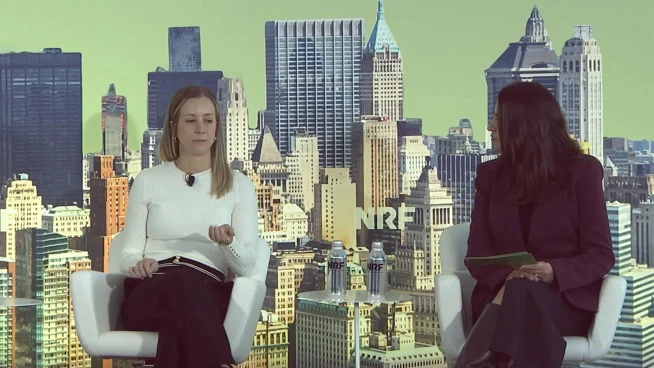
In the near term, Reznikova emphasised that most commerce activity will continue to flow through merchant-owned apps, even when discovery begins elsewhere.
Today, LLMs are primarily shaping discovery. They help interpret intent, personalise search, and guide shoppers toward the right merchants, while brands continue to own checkout, branding, loyalty, and authorisation.
“Payment credentials are becoming loyalty assets. They’re no longer just about authorisation — they’re how merchants recognise shoppers across channels and deliver consistent experiences, even as discovery moves into new AI-driven environments,” Katyal noted.
Longer term, the challenge becomes interoperability: building infrastructure that allows merchants to connect once and securely interact with many agentic surfaces, without sacrificing identity or data ownership.
Katyal summed it up simply, “The future of agentic commerce won’t be about ripping and replacing infrastructure. It will be about plugging new channels into the systems merchants already trust.”
To support this vision, Adyen has joined the Agentic AI Foundation, an initiative focused on building the standards and infrastructure that will power a secure, merchant-centric agentic ecosystem.
Why balance matters
The panel closed with clear, practical guidance for retailers navigating this transition:
Protect the non-negotiables: Safe transactions, secure consumer data, and brand integrity.
Plan for uneven adoption: Agentic discovery is growing, but change won’t happen overnight.
Experiment intentionally: Test where it makes sense, without opening the floodgates too early.
Invest in clean, structured product data so agents can represent your catalog accurately.
Design strong merchant-owned experiences within conversational platforms, assuming humans remain in the loop.
Support local payment methods to ensure agent-driven journeys work across markets, not just in theory.
Agentic commerce isn’t a single switch retailers flip. It’s a transition. And one that requires acting now, while designing for what comes next.
“Agentic commerce isn’t about choosing between innovation and control. It’s about building foundations that let merchants capture high-intent demand, protect customer relationships, and extend existing infrastructure into new channels, without compromising trust.”
Karan Katyal
VP of Digital Commercial Strategy, Adyen
The retailers that thrive won’t be the ones that wait, or the ones that rush blindly ahead. They’ll be the ones that strike the right balance: preparing for a future shaped by agents, while grounding today’s experiences in trust, familiarity, and control.
At Adyen, that balance is built into how we partner with merchants; from supporting new discovery channels, to protecting payments performance, fraud resilience, and customer relationships as commerce evolves.
In a world where commerce becomes increasingly invisible, confidence is the differentiator, and balance is how it’s built.
Did you stop by our booth at NRF?
Continue the conversation with our payments experts to see how agentic commerce fits into your roadmap for 2026.